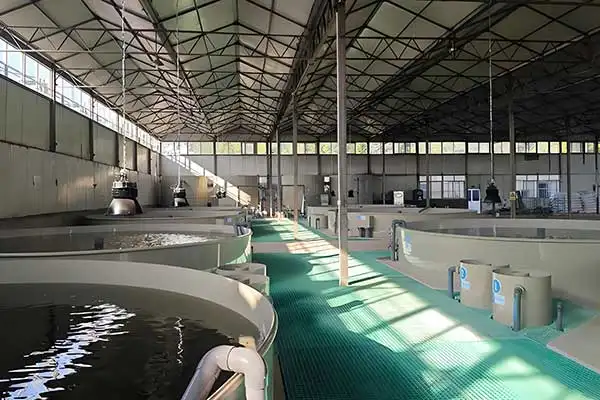
In the increasingly competitive aquaculture industry, high operating costs pose a significant challenge for every owner. From medication expenses to utility bills, each factor directly impacts final profits. However, a proven technology—the application of ozone equipment—is emerging as a powerful tool for modern farms to cut costs and boost efficiency. Properly utilizing ozone technology not only optimizes water quality and prevents diseases but also has the potential to reduce your farm’s overall operating costs by up to 30%, enabling sustainable profit growth.
I. What Is Ozone Aquaculture Technology? Why Is It So Efficient?
Ozone (O₃) is a powerful oxidizing agent composed of three oxygen atoms. In nature, ozone primarily exists in the stratosphere. In aquaculture applications, ozone equipment converts atmospheric oxygen (O₂) into ozone through methods like high-voltage discharge, then introduces it into water.
Its efficiency manifests in two core aspects:
First, powerful sterilization and disinfection capabilities. Ozone possesses exceptional oxidizing power, rapidly destroying the cellular structures of bacteria, viruses, and microorganisms—typically hundreds of times faster than chlorine. This broad-spectrum, high-efficiency sterilization effectively controls harmful pathogens in aquatic environments.
Second, its environmentally friendly nature with no secondary pollution. After completing sterilization and oxidation, ozone rapidly decomposes back into oxygen, leaving no harmful chemical residues in the water. This not only safeguards the health of farmed species but also increases dissolved oxygen levels in the water, achieving dual benefits.
II. How Ozone Equipment Reduces Operating Costs Through Three Core Processes
The claimed 30% cost reduction is not empty talk but achieved through systematic optimization of the aquaculture process. Ozone equipment helps you save money primarily through these three key areas:
-
Significantly Reducing Medication and Chemical Inputs, Saving Veterinary Drug Costs
In traditional aquaculture, disease outbreaks necessitate heavy reliance on antibiotics and disinfectants. This not only incurs substantial expenses but also risks drug residues in aquatic products and increased bacterial resistance.
How it works: By continuously purifying water, ozone equipment suppresses harmful bacterial growth at its source, drastically reducing disease outbreak probability. Statistics show that stable, high-quality water can reduce the incidence of common aquatic diseases by over 50%.
Cost-effectiveness: This means you can substantially reduce or even completely avoid using preventive and therapeutic drugs during certain phases. For a medium-sized farm, veterinary drug costs alone could save tens of thousands to hundreds of thousands of yuan annually.
-
Reduced Water Exchange Volume, Saving Water, Electricity, and Labor Costs
High-density farming generates substantial harmful substances like ammonia nitrogen and nitrite. Traditional methods primarily rely on frequent water exchanges to dilute pollutants, resulting in high water bills and electricity costs (pump energy consumption).
Working Principle: Ozone not only sterilizes but also effectively oxidizes and decomposes harmful substances in water—such as ammonia nitrogen, nitrite, and hydrogen sulfide—converting them into harmless compounds like nitrate. Simultaneously, it breaks down organic matter, enhancing water clarity and purity.
Cost-Effectiveness:
- Water Savings: By maintaining stable water quality over extended periods, the frequency of water changes in aquaculture facilities can be significantly reduced. In recirculating aquaculture systems (RAS), water savings can exceed 90%.
- Energy Efficiency: Reduced water exchange volume shortens pump operation time, directly lowering electricity costs. If constant temperature is required for farming, reduced water changes also translate to substantial savings in heating or cooling energy consumption.
- Labor Savings: Automated water treatment eliminates tedious manual tasks like water changes and chemical dosing, making aquaculture management easier and more efficient.
-
Enhancing Stocking Density and Survival Rates, Optimizing Output Efficiency
Ultimate profitability depends not only on costs but also on output. A superior aquatic environment is the cornerstone for improving farming efficiency.
Working Principle: Clean, highly oxygenated water provides optimal growth conditions for aquaculture organisms. Reduced stress responses lead to more active feeding and growth, naturally strengthening immunity.
Cost-Effectiveness:
- Increased Density: Enhanced water treatment capacity allows safe increases in stocking density within the same water area, significantly boosting output per unit. For example, where previously only 10 kg of fish could be raised per cubic meter of water, an ozone system may increase this to 15–20 kg.
- Improved Survival Rates: Reduced disease incidence throughout the entire cycle from fry to market-ready product directly increases survival rates. Even a 5%–10% improvement in survival rate contributes significantly to total yield, directly reducing unit production costs.
- Improved Feed Conversion Ratio: In a comfortable environment, the feed conversion ratio (FCR) of fish and shrimp improves, meaning the same weight gain can be achieved with less feed, thereby reducing feed costs.
III. Key Considerations for Selecting and Using Ozone Equipment
While ozone technology offers clear advantages, achieving optimal results requires scientific selection and application.
Precise Power Matching: Select equipment with output (ozone production) matching your total aquaculture water volume, stocking density, and species. Underpowered units yield poor results, while oversized ones cause waste and potential hazards.
Configure Exhaust Gas Treatment and Monitoring: Professional systems should include ozone mixing devices (e.g., jet mixers, diffuser discs) and exhaust gas destruction units to ensure complete dissolution and prevent leaks. Additionally, integrating an online ORP (Oxidation-Reduction Potential) monitor enables precise control of ozone dosage, preventing excessive concentrations that could harm aquatic life.
Selecting a Reliable Brand: As the system’s core component, the ozone generator’s stability, lifespan, and energy efficiency are critical. Opt for established brands with proven technology and comprehensive after-sales support.
Ozone equipment is not merely an expense but a long-term investment with high returns. By fundamentally optimizing water quality, it synergistically reduces chemical costs, conserves water and electricity, and enhances aquaculture efficiency—simultaneously cutting expenses and increasing revenue for farms. While initial equipment investment is required, the long-term operational savings and increased production benefits have the potential to significantly reduce overall operating costs.
Assess your farm’s operational challenges today and consult a professional ozone equipment supplier to take the first step toward cost reduction and efficiency improvement!
Frequently Asked Questions (FAQ)
Q1: Can ozone harm farmed fish and shrimp?
A: Direct exposure to high-concentration ozone can indeed damage tissues like fish and shrimp gills. Therefore, professional ozone systems employ precise concentration control and appropriate application methods (such as reaction in dedicated treatment tanks) to ensure residual ozone levels in the water entering养殖池 remain within safe limits. Automated control using ORP monitors is crucial for safety assurance.
Q2: What is the typical payback period for installing an ozone system?
A: The payback period varies based on factors like farm scale, stocking density, and existing cost structure. Generally, for medium-to-high-density farms, savings from reduced chemical usage and utility costs, combined with increased production benefits, can yield a payback period of 1-3 years. Larger-scale operations typically achieve more significant per-unit cost savings, potentially shortening the payback period.