What is Ozone Used for in Aquaculture?
Ozone is used in aquaculture primarily as a powerful oxidizing agent to improve water quality and ensure biosecurity. Unlike chemical treatments that leave harmful residues, ozone breaks down into oxygen after use. Its main functions include disinfecting water by killing bacteria, viruses, and fungi; oxidizing organic waste (such as fish feces and uneaten feed); removing color and odors to create crystal-clear water; and converting toxic nitrites into less harmful nitrates. Additionally, ozone helps micro-flocculate fine particles, making mechanical filtration more efficient. It is a critical component in Recirculating Aquaculture Systems (RAS) for maintaining high stocking densities。
Introduction: Why Modern Aquaculture Needs Ozone?
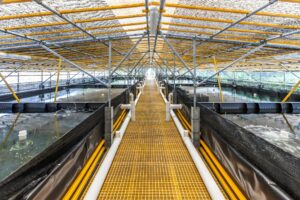
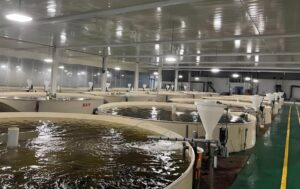
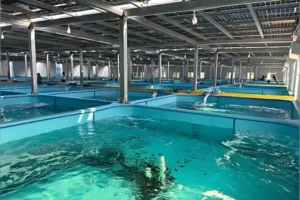
In the world of modern aquaculture, water quality is everything. As the industry shifts towards high-density Recirculating Aquaculture Systems (RAS) to maximize production and minimize environmental impact, farmers face a constant battle against accumulating waste, pathogens, and fluctuating water chemistry。
Traditional filtration methods—mechanical drum filters and biological beds—are essential, but they often hit a “glass ceiling。” They can remove solids and convert ammonia, but they struggle with microscopic pathogens, dissolved organic compounds (DOCs) that turn water yellow, and persistent fine particulates。
This is where ozone enters the equation. Often referred to as the “polishing agent” of water treatment, ozone ($O_3$) offers a level of purification that standard filtration simply cannot match. It’s not just a disinfectant; it’s a multi-tool for water chemistry management. However, ozone is also widely misunderstood. Is it dangerous? Is it expensive? Is it overkill for a small farm?
This guide will move beyond the basics, exploring exactly what ozone does, the hidden benefits most articles miss (like micro-flocculation), and the critical safety protocols you need to prevent turning your investment into a liability。
The 4 Key Functions of Ozone in Fish Farming
To understand why ozone is used, we must look at its chemical nature. Ozone is an unstable molecule consisting of three oxygen atoms. It desperately wants to return to the stable two-atom form ($O_2$), and in doing so, it releases a free oxygen atom that aggressively oxidizes—or “burns up”—contaminants in the water。
Here are the four primary jobs ozone performs in a fish tank:
Pathogen Control (Bacteria & Viruses)
The most common reason farmers install ozone generators is biosecurity. Ozone is one of the strongest commercially available oxidizers—far stronger than chlorine—and it kills microorganisms instantly upon contact。
- Mechanism: It attacks the cell walls of bacteria (lysis) and destroys the genetic material of viruses。
- Target: It is effective against a wide range of pathogens, including Aeromonas, Vibrio, and the IPN virus。
- Advantage: Unlike antibiotics, pathogens cannot build resistance to oxidative stress。
Improving Water Clarity (Color & Odor Removal)
Have you ever noticed the water in an RAS system turning a yellowish or tea-like color? This is caused by dissolved organic compounds (tannins, humic acids) building up over time. Mechanical filters cannot catch these dissolved solids。
Ozone breaks the chemical bonds of these complex organic molecules. This process, known as “bleaching,” turns the yellow water crystal clear. Clearer water is not just aesthetic; it allows fish to see food better, reduces stress, and improves the efficiency of UV sterilizers if you are using them in tandem。
Reducing Nitrite and Dissolved Organics
While your bio-filter handles Ammonia and Nitrite, sudden spikes can still happen. Ozone acts as a chemical backup. It chemically oxidizes Nitrite into Nitrate almost instantly。
Furthermore, ozone oxidizes dissolved organic carbon (DOC). By breaking down long-chain organic molecules into smaller, biodegradable compounds, ozone actually makes the food for your bio-filter easier to digest, improving the overall efficiency of your biological treatment。
The Hidden Benefit: Micro-flocculation for Better Filtration
This is an often-overlooked advantage that provides significant value。
Many RAS systems struggle with “fines”—microscopic suspended solids that pass right through a 60-micron drum filter screen. These particles irritate fish gills and harbor bacteria。
Ozone changes the surface charge of these microscopic particles. This change causes the particles to lose their ability to repel each other. Instead, they clump together (flocculate) into larger particles. These larger clumps are then big enough to be captured by your mechanical filter or protein skimmer (foam fractionator). In essence, ozone makes your existing filters work better。
Ozone vs. UV Sterilization: Which One Do You Need?
A common “People Also Ask” query is whether to buy a UV sterilizer or an ozone generator. The answer often depends on your specific goals, but they are increasingly used together。
| Feature | UV Sterilization | Ozone Generator |
|---|---|---|
| Primary Function | DNA disruption (stops reproduction) | Oxidation (physically destroys cells) |
| Water Clarity | No effect on color/tannins | Removes color (Crystal clear water) |
| Residual Effect | No residual; works only inside the unit | Residual potential; travels briefly in pipes |
| Risk Level | Low (Safe for fish/humans) | Medium/High (Requires monitoring) |
| Cost | Lower initial cost | Higher initial cost + monitoring gear |
The Verdict: If you only need to control green water (algae) and basic bacteria, UV is sufficient. However, if you need to remove yellowing (color), lower BOD/COD (chemical oxygen demand), and chemically polish the water, ozone is the only choice。
Pro Tip: Ozone actually increases UV efficiency (Transmissivity) by clearing the water, allowing UV light to penetrate deeper。
Essential Equipment: What Makes Up an Ozone System?
You cannot simply buy a generator and plug it into your tank. A safe and effective ozone system is a chain of components。
Ozone Generator Types (Corona Discharge vs. UV)
- UV Ozone Generators: Use UV light bulbs to create ozone. These are generally low-output and only suitable for very small aquariums or ponds。
- Corona Discharge (CD): This is the industry standard for aquaculture. It passes dry oxygen through a high-voltage electrical field (like a lightning storm in a box) to create high concentrations of ozone。
Injection Methods (Venturi vs. Diffusers)
How do you get the gas into the water?
- Diffusers (Air Stones): Inefficient for ozone. Most gas bubbles to the surface and is wasted。
- Venturi Injectors: The gold standard. A venturi uses a pressure differential to suck ozone gas into the water stream, creating a fine mist of bubbles and ensuring maximum mass transfer。
Ozone Destruct Units
This is a mandatory safety device. Once the ozone-treated water leaves the contact chamber, any undissolved ozone gas must be vented out. You cannot release ozone gas into the room (it is harmful to human lungs). A destruct unit contains a catalyst (like manganese dioxide) that converts waste ozone back into safe oxygen before it enters the air。
The Safety Zone: Will Ozone Kill My Fish (or Biofilter)?
This is the biggest fear for any aquaculturist. The short answer is: Yes, it can, if uncontrolled。 However, with proper protocols, it is perfectly safe。
Understanding Residual Ozone & ORP Levels
Ozone is toxic to fish gills at very low concentrations (as low as 0.01 mg/L). Therefore, you never inject ozone directly into the fish tank. It is injected into a separate “contact tank” or protein skimmer。
To ensure safety, you must monitor the ORP (Oxidation-Reduction Potential)。
- Safe Zone: 250–350 mV. This level provides clear water and bacterial reduction without harming fish。
- Danger Zone: >400 mV. At this level, free ozone may enter the culture tank, burning fish gills and causing stress or death。
Protecting Your Bio-filter
A common misconception is that ozone will sterilize your bio-filter and crash your cycle。
- The Reality: Bacteria in a bio-filter form a thick biofilm that is highly resistant to mild oxidation。
- The Fix: Always place ozone injection after the bio-filter or well before it, ensuring any residual ozone is gone before the water hits the biological media。
Critical Warning for Saltwater Systems: The Bromate Issue
This is critical information for marine aquaculturists。
In freshwater, ozone breaks down into oxygen. In saltwater, ozone reacts with naturally occurring bromide ions to form Bromate ($BrO_3^-$)。
Bromate is a stable, carcinogenic compound that does not break down easily. It can accumulate in the fish and the water。
- The Solution: If you run a saltwater system, you must use lower ozone dosages and ensure adequate water exchange. You may also need to use activated carbon filtration, which can actively remove bromates from the water。
ROI Analysis: Is an Ozone System Worth the Cost?
Installing an ozone system involves capital expenditure (CAPEX) for the generator, oxygen concentrator, ORP controller, and contact cone. Is it worth it? Let’s look at the Return on Investment (ROI)。
Increased Stocking Densities
Because ozone actively reduces the oxygen demand (COD) of the water and strips out toxic nitrites, the water can support a higher biomass of fish per cubic meter. Increasing your production capacity by even 10-15% without building new tanks often pays for the equipment within 1-2 years。
Faster Growth Rates & Feed Conversion
Fish spend a significant amount of energy dealing with stress caused by poor water quality and pathogens. In ozone-treated water (low pathogen load, high clarity), fish stress is reduced. Energy formerly used for immune response is redirected to growth. Improved Feed Conversion Ratios (FCR) mean you spend less on feed to grow the same amount of fish。
Reduced Water Exchange Costs
In RAS, replacing water is expensive (pumping, heating, and treating new water). By polishing the existing water and preventing the buildup of color and organic sludge, ozone extends the life of your process water, significantly lowering your daily water exchange rates。
Best Practices for Implementing Ozone in RAS
If you are ready to implement ozone, follow these best practices to ensure success:
1。 Dry Air is Mandatory: Corona discharge generators require incredibly dry air or pure oxygen. Humidity creates nitric acid inside the generator, destroying it in weeks. Always use an air dryer or an oxygen concentrator。
2。 Contact Time Matters: Ozone needs time to react. A simple pipe injection isn’t enough. You need a contact tank that allows for 1–3 minutes of retention time for the ozone to kill pathogens and flocculate solids。
3。 Automate with ORP: Never rely on manual dosing. Use an automated ORP controller that turns the ozone generator ON when water quality drops (low mV) and OFF when it reaches the safety limit (e.g。, 350 mV)。
4。 Degassing: After ozone injection, water should pass through a degassing vessel or trickling filter to strip out any remaining gas before returning to the fish。
Conclusion & FAQ
Ozone is more than just a disinfectant; it is a fundamental tool for high-efficiency aquaculture. While it commands respect due to its potency and potential risks, the benefits—ranging from disease control and crystal-clear water to improved filtration efficiency through micro-flocculation—make it indispensable for modern RAS。
By understanding the equipment, monitoring ORP levels, and respecting the chemistry of your water (especially in saltwater), you can harness the power of ozone to create a healthier, more profitable environment for your stock。
Frequently Asked Questions:
- Q: Can I use ozone in an outdoor pond?
* A: Yes, but it is harder to control due to fluctuating organic loads. It is most effective in controlled systems like RAS。
- Q: How do I know if I have too much ozone?
* A: You will smell a strong “thunderstorm” scent near the tank, the water ORP will exceed 400mV, and fish may show signs of respiratory distress (gasping at the surface)。
- Q: Does ozone add oxygen to the water?
* A: Yes! Since ozone is generated from oxygen and breaks back down into oxygen, it contributes to the dissolved oxygen (DO) levels in your tank。