In most industrial, water treatment, and commercial B2B disinfection scenarios, ozone is better than chlorine for germicidal efficacy, harmful byproduct reduction, and environmental sustainability, while chlorine remains more cost-effective for small-scale operations requiring long-term residual disinfection. This guide breaks down every critical factor of ozone vs chlorine, including compliance, cost, safety, and use case fit, to help you make a data-backed disinfection decision.
1. What Is the Core Difference Between Ozone and Chlorine Disinfection?
The core difference is that ozone is a naturally occurring, on-site generated oxidant with broad-spectrum, fast-acting disinfection power, while chlorine is a manufactured chemical disinfectant that requires storage, handling, and ongoing dosing.
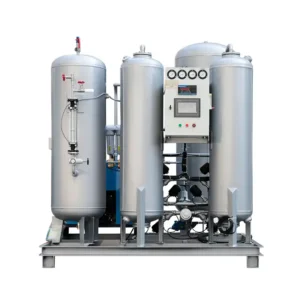
Ozone (O₃) is produced on-demand from oxygen or ambient air, eliminating the need for chemical inventory. It acts as a powerful oxidizer to inactivate pathogens by breaking down their cell walls and genetic material.
Chlorine is a stable chemical compound (most commonly sodium hypochlorite or calcium hypochlorite) that is stored on-site, dosed into water, and maintains a long-lasting residual to prevent recontamination.
2. Is Ozone More Effective at Killing Pathogens Than Chlorine?
Yes, ozone is significantly more effective than chlorine as a broad-spectrum disinfectant, with a faster kill rate and proven efficacy against chlorine-resistant pathogens.
According to the U.S. EPA, ozone’s germicidal action is 3,000 times faster than chlorine, with a higher oxidation potential (2.07 eV vs. 1.36 eV for chlorine).
Ozone effectively inactivates chlorine-resistant pathogens including Cryptosporidium, Giardia, and Legionella, which require extremely high chlorine doses and extended contact times to neutralize.
It works consistently across a wider pH range (6.0–8.5) than chlorine, whose efficacy drops sharply in pH levels above 7.5.
3. Does Ozone Produce Fewer Harmful Byproducts Than Chlorine?
Yes, ozone produces far fewer regulated, carcinogenic disinfection byproducts (DBPs) than chlorine, making it the safer choice for strict regulatory compliance.
Chlorine reacts with natural organic matter (NOM) in water to form trihalomethanes (THMs) and haloacetic acids (HAAs), two classes of DBPs regulated by the EPA for their links to cancer and reproductive harm.
Ozone does not form THMs or HAAs. Its primary byproducts are oxygen and biodegradable organic compounds, which are easily removed with minimal downstream filtration.
For facilities subject to EPA’s Stage 2 Disinfectants and Disinfection Byproducts Rule, ozone eliminates the risk of non-compliance from DBP exceedances.
4. Is Ozone Safer Than Chlorine for Industrial Operations?
When properly designed and operated, ozone is safer for industrial teams and facility operations than chlorine, with lower occupational and environmental risk.
Chlorine is a toxic, corrosive chemical classified as a hazardous material by OSHA and the DOT. It requires strict storage protocols, spill containment, and employee PPE training to prevent accidental exposure, which can cause severe respiratory damage, chemical burns, or even fatal leaks.
Ozone is generated on-site and on-demand, eliminating all risks associated with chemical transportation, storage, and handling.
While high concentrations of ozone pose respiratory risks, modern systems include built-in safety monitors and destruct units to keep ambient levels well below OSHA’s permissible exposure limit (PEL) of 0.1 ppm over an 8-hour workday.
5. Ozone vs Chlorine: Full Cost Comparison for Industrial Applications
Ozone has higher upfront capital costs but lower long-term operational costs, while chlorine has lower initial investment but higher ongoing and hidden compliance costs.
| Cost Category | Ozone Disinfection | Chlorine Disinfection |
|---|---|---|
| Upfront Capital Expense (CAPEX) | Higher: Requires ozone generator, oxygen feed system, and monitoring equipment | Lower: Requires only dosing pumps and chemical storage tanks |
| Ongoing Operational Expense (OPEX) | Lower: Only electricity and minimal maintenance; no recurring chemical purchases | Higher: Recurring chemical procurement, delivery, and handling costs |
| Hidden Compliance & Safety Costs | Minimal: No hazardous material reporting, spill prevention planning, or DBP compliance fines | Significant: Requires OSHA-compliant storage, regulatory reporting, and potential fines for DBP exceedances |
| 5-Year Total Cost of Ownership (TCO) | Lower for mid-to-large industrial facilities (≥100 GPM flow rate) | Lower only for very small, low-flow operations |
For mid-sized and large industrial facilities, ozone typically delivers a full return on investment (ROI) within 18–36 months, driven by eliminated chemical costs and reduced compliance labor.
Small-scale operations with low flow rates may find chlorine more cost-effective in the short term, even with ongoing chemical expenses.
5. Which Disinfection Method Is More Compliant With Global Industry Standards?
Both ozone and chlorine meet global regulatory standards, but ozone makes it easier to comply with strict limits for disinfection byproducts and hazardous material management.
Ozone is approved for disinfection by the U.S. EPA, FDA (for direct food contact), NSF/ANSI Standard 61 (drinking water system components), and ISO 14001 environmental management standards.
Chlorine is also regulated and approved by these bodies, but facilities must continuously monitor and report DBP levels to stay within EPA and global drinking water limits.
For food and beverage manufacturing, ozone meets FDA 21 CFR Part 178 requirements for food contact surfaces, with no residual chemical left on products, eliminating the need for rinsing required with chlorine.
6. Can Ozone Fully Replace Chlorine in Industrial Systems?
Ozone can fully replace chlorine in most industrial disinfection applications, with only limited scenarios requiring a low residual chlorine dose for secondary protection.
• Full replacement is standard and recommended for: Food and beverage processing, pharmaceutical manufacturing, bottled water production, industrial wastewater treatment, and cooling tower water systems.
• Partial replacement (ozone primary disinfection + low-dose chlorine residual) is common for: Municipal drinking water distribution systems, where long-distance pipe networks require ongoing disinfection to prevent recontamination.
Even in hybrid systems, ozone reduces chlorine usage by 80–90%, cutting DBP formation and chemical handling risks dramatically.
7. Top 4 Misconceptions About Ozone vs Chlorine
Misconception 1: Ozone is always too expensive for industrial operations
This is false for 90% of mid-to-large industrial facilities, as ozone’s lower long-term operational and compliance costs deliver a fast ROI, even with higher upfront equipment costs.
Many facilities overestimate ozone’s ongoing costs, as it eliminates 100% of chemical procurement, storage, and handling expenses, which often make up 60–70% of chlorine’s total annual cost.
Misconception 2: Chlorine is the only compliant option for drinking water disinfection
This is false. The EPA has approved ozone for primary drinking water disinfection since 1982, and it is widely used in municipal and bottled water facilities globally to meet strict DBP regulations.
In fact, many facilities switch to ozone specifically to comply with EPA DBP limits that are nearly impossible to meet with high-dose chlorine disinfection.
Misconception 3: Ozone has no operational safety risks
While ozone eliminates chemical handling risks, it is not risk-free. Improperly designed systems can lead to excess ambient ozone exposure, which is regulated by OSHA.
This risk is easily mitigated with standard safety equipment, including ozone destruct units, ambient air monitors, and automated system shutdowns, which are included in all industrial-grade ozone systems.
Misconception 4: Ozone and chlorine cannot be used together
This is false. A hybrid ozone-chlorine system often delivers the best of both worlds: ozone’s fast, complete primary disinfection, plus chlorine’s long-lasting residual for distribution networks.
This hybrid approach reduces chlorine usage by up to 90%, minimizing DBP formation while maintaining compliance for systems with long water retention times.
FAQ High-Frequency Q&A
• Q: How long does ozone last in water compared to chlorine?
A: Ozone decomposes completely in water within 10–30 minutes, while chlorine can maintain a stable disinfection residual for days or weeks with proper dosing. This short half-life makes ozone ideal for closed-loop disinfection, while chlorine is preferred for long-distance water distribution systems.
• Q: Is ozone better than chlorine for food processing and food safety?
A: Yes, ozone is FDA-approved for direct food contact disinfection, outperforming chlorine at killing foodborne pathogens like E. coli and Salmonella with no chemical residue left on products. Unlike chlorine, ozone does not alter the flavor, texture, or color of food products, and eliminates the need for post-disinfection rinsing required in many food safety protocols.
• Q: Which is more eco-friendly: ozone or chlorine?
A: Ozone is significantly more eco-friendly than chlorine, as it is generated on-site from oxygen, leaves no persistent chemical residue, and does not contribute to toxic aquatic contamination. Chlorine discharge is heavily regulated by the EPA, as it harms aquatic life and creates persistent environmental pollutants in waterways.