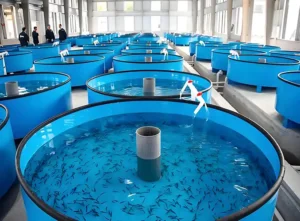
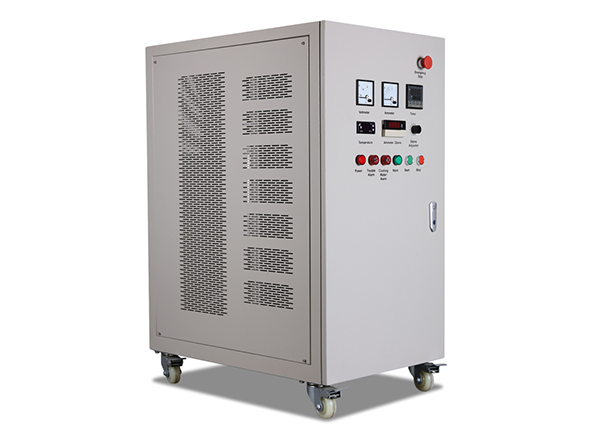
An ozone generator for aquaculture is a device that produces ozone gas (O₃) used to treat water in aquaculture systems. Ozone is a powerful oxidant capable of disinfecting water and removing organic compounds, pathogens, and other contaminants that can harm fish and aquatic organisms.
In this guide, we cover exactly how an ozone generator works in aquaculture, proper sizing and dosing, safe ORP thresholds, installation best practices, and common mistakes to avoid.
How Does an Ozone Generator Work in Aquaculture?
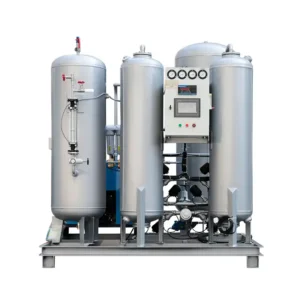
Ozone generators convert oxygen (O₂) into ozone (O₃) through corona discharge. Oxygen from the air is captured and concentrated by purging nitrogen from that air. This oxygen is converted to ozone within the ozone generator via corona discharge.
How Is Ozone Delivered Into Aquaculture Water?
In aquaculture systems, ozone is injected via a venturi injector or diffuser, where it dissolves and interacts with the water. The dosage is carefully controlled via dissolved ozone meters or ORP meters to balance effectiveness with safety for animal life.
Key steps in the process:
• Oxygen supply — On-site oxygen concentrators or liquid oxygen (LOX) feed the generator.
• Corona discharge — An electrical arc splits O₂ molecules, forming O₃.
• Injection — Ozone gas enters the water loop through venturi injectors or diffusers.
• Reaction — Ozone oxidizes organic matter, bacteria, pathogens, and harmful compounds, safely leaving oxygen as the primary by-product.
• Residual removal — After a brief contact time, the water is irradiated with UV light to remove the residual ozone. Following irradiation, the water is ozone free and ready to be oxygenated and sent to the fish tanks.
Where Is Ozone Installed in a RAS Loop?
In recirculating aquaculture systems, ozone treatment is typically installed after mechanical filtration and before biofilters. This reduces organic load, supports biofilter performance, and stabilizes water quality.
Ozone is most commonly used for two applications in aquaculture facilities: 1) disinfecting influent water for the facility from the water source, 2) in-line water treatment as part of a recirculating aquaculture system (RAS) filtration setup.
Why Use Ozone in Aquaculture? Top 7 Benefits
Ozone delivers simultaneous disinfection, organic removal, and oxygenation — no other single treatment matches this range.
| Benefit | How It Works |
|---|---|
| Pathogen control | Ozone can effectively inactivate a range of bacterial, viral, fungal and protozoan fish pathogens. |
| Fine solids removal | Ozone removes fine and colloidal solids by causing clumping of the solids (microflocculation), which facilitates removal by foam-fractionation, filtration and sedimentation. |
| Dissolved organic reduction | Ozone removes dissolved organic compounds by oxidation into products that are more readily nitrified. |
| Nitrite oxidation | Ozone directly oxidizes toxic nitrite (NO₂⁻) into safer nitrate (NO₃⁻). |
| Color & odor removal | Off-flavors such as geosmin and MIB can severely reduce the market value of harvested fish. Ozone does not directly destroy these compounds at typical concentrations. However, by oxidizing dissolved organic matter and fine particulates before bacteria convert them into geosmin or MIB, ozone indirectly reduces the conditions that lead to their formation. |
| Dissolved oxygen boost | After reaction, ozone decomposes back into oxygen, increasing dissolved oxygen (DO) levels — essential for healthy fish respiration and metabolism. |
| Chemical-free operation | Using ozone in aquaculture eliminates the need for antibiotics and other chemical treatments, promoting healthier growth and reducing operational costs. |
What Is the Correct Ozone Dosage for Aquaculture?
Typical ozone dosing in RAS ranges from 0.1–0.3 mg/L based on flow rate. As a general guideline, ozone dosing typically ranges from 0.1 to 0.3 mg/L based on flow rate. Ozone demand is approximately 12 to 16 grams of ozone per kilogram of feed. However, this is typical for finfish in cold water.
For crustacean species, this can rise to 25 g of ozone per kg of feed.
How Do You Control Ozone Dosing Safely?
The feed-to-ozone ratio is commonly used as a reference for sizing both the ozone generator and the protein skimmer in RAS systems. However, the most efficient way to control ozone dosing in operation is by monitoring the ORP (Oxidation-Reduction Potential).
Critical ORP thresholds:
• A safe ORP level of freshwater fish culture is generally considered to be 300 mV.
• When an upper ORP setpoint is reached (typically 300–320 mV), the system suspends ozone addition or automatically discontinues O₃ output until a lower ORP setpoint is reached.
• Research indicates that ≤350 mV is likely the safe ORP threshold value for many farmed fish.
• When treating seawater, ORP should be carefully monitored. Exceeding 800 mV of ORP can oxidize bromide ions into bromine, which is toxic to aquatic species.
| System Type | Safe ORP Range | Max ORP Limit |
|---|---|---|
| Freshwater RAS | 300–320 mV | ≤350 mV |
| Brackish water RAS | 250–300 mV | ≤350 mV |
| Seawater systems | Monitor closely | <800 mV |
What Types of Ozone Generators Are Used in Aquaculture?
Corona discharge generators dominate commercial aquaculture. The most commonly employed method in aquaculture is called a corona discharge generator and employs an electric arc to split the diatomic molecule.
Corona Discharge vs. UV Ozone Generators
UV ozone generators are also sold for aquaculture, but they are capable of producing only low levels.
| Feature | Corona Discharge | UV Ozone Generator |
|---|---|---|
| Output capacity | High (g/h to kg/h) | Low (mg/h range) |
| Feed gas | Pure oxygen or dried air | Ambient air |
| Best for | Commercial RAS, hatcheries | Small ornamental tanks |
| Energy efficiency | Higher per gram O₃ | Lower per gram O₃ |
What Feed Gas Should You Use?
High quality gases for ozone units have two essential qualities (correct purity and correct dryness) measured as dew point. “Ideal oxygen purity for ozone production is in the 93-96 per cent range.”
Ozone can be made from a feed gas of either air or pure oxygen; in either case, the gas needs to be clean and dry.
Pro tip: Most commercial aquaculture facilities already run oxygen systems. Aquaculture facilities are unique in that they already have a functioning oxygen system. This allows a facility to add capacity to their current oxygen system to be used for the ozone system or create a dedicated source of oxygen for ozone production.
How to Size an Ozone Generator for Your Aquaculture Operation
Size your ozone generator based on daily feed input, water flow rate, and target ORP. Follow this practical framework:
• Calculate daily feed load — Measure total kg of feed per day.
• Apply the feed-to-ozone ratio — Ozone dosing typically ranges from 0.1 to 0.3 mg/L based on flow rate. Ozone demand is approximately 12 to 16 grams of ozone per kilogram of feed.
• Factor in species — Cold-water finfish: 12–16 g O₃/kg feed. Shrimp/crustaceans: up to 25 g O₃/kg feed.
• Account for organic load — Higher stocking density = higher ozone demand.
• Build in redundancy — Larger companies tend to build in extra capacity or purchase oversized generators. Smaller companies tend to look for durable, fixable units with some extra capacity.
Example: A RAS feeding 100 kg/day of cold-water fish feed needs approximately 1,200–1,600 grams of ozone per day (12–16 g × 100 kg).
Ozone vs. UV vs. Chlorine for Aquaculture Disinfection
| Parameter | Ozone | UV Irradiation | Chlorine |
|---|---|---|---|
| Pathogen kill range | Bacteria, viruses, fungi, protozoa | Bacteria, viruses | Bacteria, some viruses |
| Organic removal | Yes | No | No |
| Chemical residue | None (reverts to O₂) | None | Harmful by-products |
| Color/odor removal | Yes | No | Partial |
| DO boost | Yes | No | No |
| Contact time | 1–3 minutes | Seconds | 15–30 minutes |
| CAPEX | Higher | Moderate | Low |
| OPEX | Moderate | Moderate (lamp replacement) | Ongoing chemical cost |
Ozone has seen wide use in aquaculture because it has a rapid reaction rate, produces few harmful reaction by-products in freshwater, and oxygen is produced as a reaction end-product.
5 Common Mistakes When Using Ozone in Aquaculture
Most ozone system failures stem from avoidable errors. Based on decades of field experience, here are the top pitfalls:
Mistake 1: Overdosing Without ORP Monitoring
High residual ozone concentrations are a risk to cultured fish stocks, causing gross tissue damage and stock mortalities. Always install an ORP-linked automatic shutoff.
Mistake 2: Using Low-Quality Feed Gas
The biggest key to operating and maintaining an ozone system is to keep the system from fouling. The quality of the oxygen supply directly affects the unit’s ability to operate efficiently and continue to operate long term.
Wet or impure oxygen degrades the corona discharge cell rapidly. Insist on ≥93% purity and proper dew point.
Mistake 3: Ignoring Biofilter Impact
The reduction of nitrite levels by ozone carries a risk. The biofilter receives less nitrite and the population of bacteria responsible for processing nitrite to nitrate diminishes. If any disruption to ozonation occurs, dangerous spikes in nitrite concentration can subsequently develop.
Solution: Monitor nitrite independently. Maintain a backup plan for ozone outages.
Mistake 4: Choosing the Cheapest Generator
“Companies looking for ozone units should always evaluate their CAPEX versus OPEX cost. Cheap upfront units often come with expensive or difficult-to-get parts, which will need to be frequently replaced. Some distributors and manufacturers provide no or very little support to the client.”
Mistake 5: Skipping Residual Ozone Destruction
If sufficient ozone residual is maintained to kill pathogens, care must be taken to reduce the concentration before it flows back over the fish. Always install UV destruct units or ensure adequate contact/decay time before water returns to culture tanks.
Frequently Asked Questions
Q1: Is ozone safe for fish in aquaculture?
Yes, ozone is safe when properly dosed and monitored. A safe ORP level of freshwater fish culture is generally considered to be 300 mV. Many systems automate ozonation by linking ORP measurement and the ozone generator. Residual ozone must be removed before water reaches fish tanks.
Q2: How much does an ozone generator for aquaculture cost?
Costs vary widely based on output capacity. Small units (5–10 g/h) start around $2,000–$5,000. Commercial RAS-grade systems (50–500 g/h) range from $10,000–$80,000+, including injection and monitoring equipment. Always evaluate total cost of ownership, not just CAPEX.
Q3: Can ozone replace UV disinfection in a RAS?
Ozone and UV serve complementary roles. Combining ozone dosages of only 0.1–0.2 min mg/L with a UV irradiation dosage of approximately 50 mJ/cm² would consistently reduce bacteria counts to near zero. Many top-performing RAS use both.
Q4: Does ozone harm the biofilter in a RAS?
It can, if over-applied. Chronic exposure to ozone improved water clarity without compromising the metabolic status of biofilm at controlled doses. However, excessive ozone directly contacting the biofilter can inhibit nitrifying bacteria.
Q5: How long does ozone last in water?
Ozone has a short half-life, typically ranging from six to 20 minutes, depending on water temperature and organic load. In high-organic RAS water, ozone reacts and dissipates within minutes.
Q6: Can ozone be used in seawater aquaculture?
Yes, but with extra caution. The use of ozone in brackish and seawater systems presents a challenge as ozone leads to the formation of byproducts (total residual oxidants — TROs). Keep ORP well below 800 mV to prevent toxic bromine formation.
An ozone generator for aquaculture is one of the most versatile and effective water treatment tools available for modern fish farming and RAS operations. It delivers disinfection, organic removal, and dissolved oxygen enhancement — all without leaving chemical residues.
The key to success lies in proper sizing based on feed load, safe ORP-controlled dosing, quality feed gas, and robust monitoring systems. Whether you operate a freshwater trout hatchery, a brackish salmon RAS, or a tropical shrimp farm, ozone technology can reduce disease risk, improve water clarity, and boost production efficiency.