Ozone is not universally better than UV light in aquaculture — each technology solves a different problem, and most high-performing RAS facilities use both. Rather than competing, UV and ozone are considered complementary technologies, and each system can have various process advantages depending on the disinfection need. Ozone excels at oxidizing dissolved organics, improving water clarity. UV excels at fast, chemical-free pathogen inactivation without adding anything to the water.
How Does Ozone Work in Aquaculture Water Treatment?
Ozone (O₃) is a powerful oxidant that reacts instantly with organic matter, pathogens, and dissolved contaminants in your water.
The increasing demand for advanced water treatment technologies in aquaculture — especially in recirculating aquaculture systems (RAS) — has put ozone in the spotlight. Ozone is widely recognized for its ability to reduce organic loads, improve water quality, clarify water, and significantly decrease pathogen levels.
Key functions of ozone in aquaculture:
• Pathogen reduction: Ozone is used in RAS as a disinfectant, to remove organic carbon, and also to remove turbidity, algae, color, odor and taste. Ozone can effectively inactivate a range of bacterial, viral, fungal and protozoan fish pathogens.
• Microflocculation: Ozone can promote the flocculation of microparticles and suspended solids in the water, aiding in their removal through mechanical filtration.
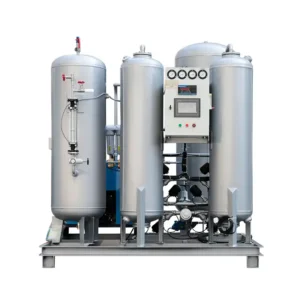
• Dissolved oxygen boost: Another notable advantage of ozone treatment is improved dissolved oxygen levels. Most ozone generators use oxygen from liquid oxygen, bottled oxygen, or oxygen concentrators as a feed gas. Since only five to 12 per cent of the oxygen converts into ozone during normal operation, the remaining oxygen dissolves into the water.
What Is the Correct Ozone Dose for RAS?
Typical ozone dosing ranges from 0.1 to 0.3 mg/L based on flow rate.
As a general guideline, ozone dosing typically ranges from 0.1 to 0.3 mg/L based on flow rate. Ozone demand is approximately 12 to 16 grams of ozone per kilogram of feed. However, this is typical for finfish in cold water.
For crustacean species, this can rise to 25 g of ozone per kg of feed.
ORP control is critical. Oxidation reduction potential (ORP) — an indirect measure of ozone residual — is monitored via a differential sensor positioned at the tank inlet. Millivolt readings from the ORP probe are received by a digital control system that is integrated within an on/off feedback loop. When an upper ORP setpoint is reached (typically 300–320 mV), one of two strategies are employed to maintain a safe ORP level.
Does Ozone Leave Harmful Residuals?
In freshwater RAS, ozone’s primary by-product is oxygen — no harmful residuals.
Ozone by-products and toxicity are not found in freshwater RASs. However, in saltwater systems, ozone can react with bromide ions to form bromate — a known concern. Ozone can be used in seawater and brackish water systems. However, its application is safer in freshwater where the primary reaction by-product is oxygen.
⚠️ Compliance Note: Ozone is toxic to both fish and humans at relatively low concentrations. The 8-h human exposure limit for airborne ozone gas established by OSHA is just 0.1 ppm, and the 15-minute exposure limit is only 0.3 ppm. Always install ambient ozone monitors and auto-shutoff systems.
How Does UV Light Work in Aquaculture?
UV-C light (254 nm) inactivates pathogens by damaging their DNA/RNA, preventing reproduction — without adding chemicals to the water.
UV-C light is germicidal and can effectively inactivate microorganisms by damaging their DNA or RNA, preventing replication. UV disinfection targets a wide range of waterborne pathogens, including bacteria, viruses, and parasites, reducing the risk of disease outbreaks among the farmed fish.
Core advantages of UV in aquaculture:
• Zero chemical residuals: As no chemical by-products are added, the crucial water qualities such as pH and temperature remain unaltered, while causing massive improvements in the water turbidity.
• Simple operation: UV sterilizers require minimal operator training. Plug into the water loop, monitor lamp hours, and replace bulbs annually.
• Validated performance: NIVA (Norwegian Institute for Water Research) has conducted detailed research on the applicability of UV treatment for various fish diseases and has confirmed that UV is effective. It has also confirmed medium pressure UV (polychromatic output) is more effective than low-pressure UV (monochromatic output), on a like for like basis.
What UV Dose Do You Need for Aquaculture?
UV dose = UV intensity × contact time, measured in mJ/cm².
UV dose is the product of UV Light Intensity and Residence Time (contact time in the reaction chamber). It is measured in mJ/cm². There are specific doses needed for specific fish diseases found in aquaculture systems.
| Target Pathogen | Typical UV Dose (mJ/cm²) |
|---|---|
| Bacteria (general) | 20–40 |
| Viruses (IHN, VHS) | 50–100 |
| Parasites (Ichthyophthirius) | 100–200+ |
| Fungi (Saprolegnia) | 80–150 |
Pro tip: Always size your UV system based on worst-case UVT (UV transmittance). The UVT of the water is an important parameter as it influences the efficiency of the UV system, often significantly — which in turn drives equipment sizing and therefore both CAPEX and OPEX.
Does Water Quality Affect UV Performance?
Yes — UV is highly sensitive to water clarity. While UV can be an effective disinfectant, there are problems with its use in water. First, the water itself absorbs the radiation and second, particles and colors in the water absorb even more. UV will kill waterborne microbes, but it must reach them first. Water in recirculation systems is usually stained and carries a large amount of smaller particulates.
This is exactly where ozone helps. Ozone improves UVT by breaking down dissolved organics — making a downstream UV system significantly more effective.
Ozone vs UV Light: Side-by-Side Comparison for Aquaculture
| Factor | Ozone (O₃) | UV Light (UV-C) |
|---|---|---|
| Primary function | Oxidation + water quality improvement | Pathogen inactivation |
| Pathogen kill | Effective (bacteria, viruses, fungi, protozoa) | Highly effective (same spectrum) |
| Chemical residuals | None in freshwater; bromate risk in saltwater | None |
| Water clarity | Dramatically improves (microflocculation) | No direct effect |
| Dissolved O₂ boost | Yes — significant | No |
| Organic matter removal | Yes — primary strength | No |
| Equipment complexity | Higher (generator, contact chamber, ORP control, de-ozonation) | Lower (lamp, reactor, flow control) |
| Capital cost | Higher upfront | Lower upfront |
| Lifecycle cost | Compared to UV or chemical dosing, lifecycle cost is 30–50% lower. | Higher energy for high-flow systems |
| Safety risk | Toxic to fish/humans if overdosed | UV exposure risk to workers; no water toxicity |
| Maintenance | ORP sensor calibration, generator servicing | UV bulbs lose power rather quickly and must be replaced at least annually. |
| Sensitivity to water quality | Functions in turbid water | Highly sensitive to UVT |
Bottom line: Ozone is better for water quality management. UV is better for targeted pathogen kill. For maximum biosecurity, use both.
When Should You Choose Ozone Over UV?
Choose ozone when water quality — not just disinfection — is your primary challenge.
Ozone is the better standalone choice when:
• Your RAS runs at low water exchange rates — dissolved organics, color, and fine solids accumulate fast. Low-dose ozonation resulted in significant reductions in TSS, biochemical oxygen demand, and true color of the culture water. The most profound effect was diminished color, which was otherwise observed as tea-colored turbidity resulting from dissolved organic matter.
• You need to improve fish growth rates — Rainbow trout grew significantly faster in low exchange RAS operated with ozone compared to trout raised in similarly operated RAS without ozone.
• Your facility already uses liquid oxygen (LOX) — Aquaculture facilities are unique in that they already have a functioning oxygen system. This allows a facility to add capacity to their current oxygen system to be used for the ozone system.
• You need effluent disinfection before discharge to meet environmental permits.
When Should You Choose UV Over Ozone?
Choose UV when you need simple, reliable pathogen control with minimal operator training.
UV is the better standalone choice when:
• Budget is tight — UV sterilization can be employed much less expensively than ozonation.
• Your water source is clean with high UVT (>85%).
• You operate a flow-through hatchery where water passes once and is discharged.
• You need to destroy residual ozone before water returns to fish tanks — The second method is applying 254nm UV energy to consume the residual ozone in the bulk water prior to contacting the fish.
Why the Best Aquaculture Facilities Use Ozone AND UV Together
Combining ozone and UV creates a double-barrier disinfection system that outperforms either technology alone.
When ozonation was followed by UV irradiation, total heterotrophic bacteria counts and total coliform bacteria counts were reduced to near zero. Combining ozone dosages of only 0.1–0.2 min mg/L with a UV irradiation dosage of approximately 50 mJ/cm² would consistently reduce bacteria counts to near zero. These findings were orders of magnitude lower than the bacteria counts measured in the system when it was operated without disinfection or with UV irradiation alone.
Here is the ideal placement in a RAS loop:
• Mechanical filtration (drum filter / microscreen)
• Biofiltration (moving bed or fluidized sand)
• Ozone injection (sidestream with contact chamber)
• UV irradiation (destroys residual ozone + kills remaining pathogens)
• Oxygenation + return to culture tanks
Ozone is injected into the water after solid removal and bio-filtration. After a brief contact time, the water is irradiated with UV light to remove the residual ozone. Following irradiation, the water is ozone-free and ready to be oxygenated and sent to the fish tanks.
This dual approach solves the biggest safety concern about ozone: UV eliminates residual O₃ before it reaches your fish.
Frequently Asked Questions
Q1: Is ozone safe for fish in aquaculture?
Yes — when properly dosed. When properly dosed, ozone is safe and widely used across commercial aquaculture facilities. Keep ORP below 320 mV in freshwater RAS. Always include de-ozonation (UV or activated carbon) before water contacts fish.
Q2: Can UV light kill all pathogens in a fish farm?
UV can inactivate most bacteria, viruses, and parasites at sufficient dose. However, UV will not kill parasites attached to the body of animals or contained in the mucus, those adhered to rocks, etc. UV only treats pathogens in the water column as it passes through the reactor.
Q3: What certifications should ozone/UV equipment have for aquaculture?
Look for equipment validated to NSF/ANSI 50 (for water treatment equipment), CE marking for EU markets, and UL listing for North American facilities. Ozone generators should meet ISO 13623 standards for gas purity. UV systems should be validated by third-party bioassay testing (e.g., NIVA protocol for aquaculture applications).