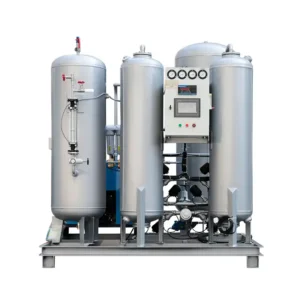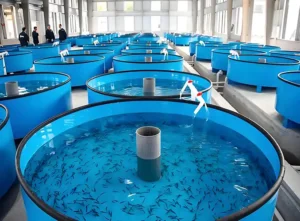
Yes — ozone is safe in seawater RAS when you apply strict dosing controls, continuous ORP monitoring, and proper by-product removal. The critical difference between freshwater and seawater ozone use is one chemical: bromide. Ozonation of brackish or seawater produces different by-product oxidants than freshwater. Ozone reacts with bromide and chloride ions in saltwater to produce relatively stable oxidants that are toxic to aquatic organisms.1 Without the right safeguards, these ozone-produced oxidants (OPO) can stress or kill your stock.
Why Is Ozone Used in Seawater RAS?
Ozone serves multiple critical functions in marine recirculating aquaculture. It goes far beyond simple disinfection.
Ozone is used in RAS as a disinfectant, to remove organic carbon, and also to remove turbidity, algae, color, odor and taste. Ozone can effectively inactivate a range of bacterial, viral, fungal and protozoan fish pathogens. But the effectiveness of ozone treatment depends on ozone concentration, length of ozone exposure (contact time), pathogen loads and levels of organic matter.
What Are the Core Benefits of Ozone in Marine RAS?
Ozone delivers a multi-benefit water quality improvement that no single alternative can match:
- Pathogen reduction: Inactivates bacteria, viruses, fungi, and protozoa
- Organic load oxidation: Breaks down dissolved organic carbon (DOC) that causes yellow-brown discoloration
- Nitrite control: In RAS systems, nitrites (NO₂⁻) can quickly reach toxic concentrations. Ozone helps limit these spikes by partially oxidizing NO₂⁻ into nitrate (NO₃⁻), which reduces nitrite accumulation and stabilizes the nitrogen cycle.
- Microflocculation: Causes fine colloidal particles to clump, improving removal by foam fractionation and filtration
- UV transmittance boost: Clearer water allows downstream UV systems to perform more effectively
Does Ozone Replace Chemical Disinfectants in Marine RAS?
Yes, in most cases. Ozone promotes fish health by creating cleaner environments and reducing the risk of disease outbreaks. Unlike chlorine or antibiotics, ozone leaves no residue, no taste, and no environmental impact. It’s a truly non-chemical water treatment solution that makes sense for modern, sustainable aquaculture facilities.
However, ozone in seawater requires more engineering discipline than in freshwater. The reason is bromide chemistry.
What Makes Ozone Risky in Seawater vs. Freshwater RAS?
The primary risk is the formation of toxic ozone-produced oxidants (OPO) from bromide ions naturally present in seawater. This is the single most important difference between freshwater and marine ozone applications.
How Do Ozone-Produced Oxidants Form in Seawater?
During ozonation, ozone reacts with several compounds resulting in the formation of “ozone-produced oxidants” (OPO) also mentioned as total residual oxidants (TRO) including free bromine (HOBr/OBr⁻) and bromamines (NH₂Br, NHBr₂), which are more stable than ozone.
In freshwater, ozone simply breaks down into oxygen within seconds. OPO concentrations might exceed the maximum safe exposure level in some applications. Whereas in freshwater residual ozone and secondarily produced radical species dissociate within seconds, OPO formed in seawater are much more stable and have to be removed.
This stability is what makes seawater ozone use more dangerous — and more controllable with the right equipment.
What Is the Bromate Formation Risk?
Bromate (BrO₃⁻) is a regulated probable human carcinogen that forms when ozone oxidizes bromide in seawater. One drawback is the potential formation of bromate, a possible human carcinogen with a strict drinking water standard of 10 μg/L.
Seawater contains approximately 65 mg/L of bromide — far higher than any freshwater source. In seawater ozonation, BrO₃⁻ was generated exceeding a 5 mg/L ozone dose despite the high Br⁻ (65 mg/L).8
Key factors that increase bromate formation:
| Factor | Effect on Bromate |
|---|---|
| Higher ozone dose | Increases formation |
| Longer contact time | Increases formation |
| Higher bromide concentration | Increases formation |
| Higher pH | Increases formation |
| Lower dissolved organic matter | Increases formation (less ozone consumed by DOM) |
The formation of bromate during ozonation is strongly dependent on the characteristics of the water to be treated and the amount of ozone contacting the water. Important variables include bromide concentration, pH, applied ozone concentration and contact time, DOC concentration, alkalinity, ammonia concentration, and temperature.
What Are the Safe ORP Limits for Ozone in Seawater RAS?
For most marine species, keep ORP below 300–320 mV in fish culture tanks. This is the single most critical number for safe ozone operation in seawater RAS.
What Does the Research Show for Specific Species?
Atlantic salmon (brackish water, 12 ppt):
They were exposed to ozone levels of 250 (control), 280 (low), 350 (medium), 425 (high) and 500 (very high) mV. They identified ozone levels up to 350 mV as potentially safe and 300 mV as safe for the health of post-smolts in flow-through brackish water.
Fish exposed to 425 mV and higher showed ≥33% cumulative mortality in less than 10 days. No significant mortalities were recorded in the remaining groups.
European sea bass (seawater):
The alteration in blood glucose and plasma protein concentration showed that ORP around 300–320 mV started to stress sea bass. Once the ORP exceeded 320 mV in the tanks during the P3 period, mortality occurred even when total residual oxidants was only 0.03– … Results strongly suggest that for European sea bass in RAS, the ORP should not exceed 320 mV in the tanks.
Safe ORP Threshold Summary Table
| Species | Water Type | Safe ORP (Tank) | Stress Onset | Mortality Onset |
|---|---|---|---|---|
| Atlantic salmon post-smolt | Brackish (12 ppt) | ≤300 mV | 350 mV | ≥425 mV |
| European sea bass | Seawater | ≤300 mV | 300–320 mV | >320 mV |
| Pacific white shrimp | Seawater | Species-specific | Varies | Varies |
| Turbot | Seawater | ≤320 mV | Varies | >60 µg/L as Cl₂ |
Compliance Note: Always establish species-specific safe ORP limits through your own acclimation trials before full-scale deployment. Published thresholds are guidelines, not guarantees.
How Should You Dose Ozone in a Seawater RAS?
Use a sidestream application with continuous ORP feedback control. Never inject ozone directly into fish culture tanks in a marine system.
What Dosing Rates Apply?
As a general guideline, ozone dosing typically ranges from 0.1 to 0.3 mg/L based on flow rate. Ozone demand is approximately 12 to 16 grams of ozone per kilogram of feed.
For crustacean species, this can rise to 25 g of ozone per kg of feed.
These values apply primarily to freshwater finfish. In seawater, start at the low end and increase gradually while monitoring ORP and TRO in real time.
What Is the Recommended Contact Time?
The recommended contact time is typically from one to three minutes in a side-stream application. Higher ozone concentration will result in lower contact times and vice-versa.
Best Practice: Sidestream Ozone Injection Protocol for Seawater RAS
- Inject ozone via venturi into a sidestream loop — typically through the protein skimmer
- Target 700–750 mV ORP at the skimmer outlet — a target of around 700–750 mV at the outlet of the protein skimmer is generally a good indicator that organic matter and pathogens are being effectively oxidized. Since skimmers operate in parallel, this allows ORP to be maintained at around 200–300 mV so as not to pose a risk to the animals.3
- Install dual ORP probes at the tank inlet for redundancy
- Configure automated shutoff when ORP exceeds your species-specific safe limit
- Install activated carbon filtration downstream to remove residual oxidants before water returns to tanks
How Do You Remove Ozone-Produced Oxidants from Seawater?
Activated carbon filtration is the primary method for removing OPO from ozonated seawater. This is non-negotiable for marine RAS.
Use of ozone in saltwater systems is usually restricted to batch treatment of water separate to the main recirculating flow. Activated carbon filtration can be used to remove residual ozone and other oxidants from ozonated saltwater.
Additional OPO removal methods:
- UV irradiation: Subsequent research focused on advanced oxidation of RAS water using high-dose ozone followed by ultraviolet (UV) irradiation. This research indicated that a relatively strong ozone dose to achieve > 375 mV ORP could be applied to RAS water when followed by UV irradiation levels sufficient to destroy residual ozone before water returned to the fish.
- Degassing columns: An in-line activated carbon filter or biofilter can also function as a de-ozonation unit. Degassing of residual ozone also occurs in packed column aerators and trickle filters.
- Protein skimmers: Foam fractionation physically removes oxidized organic matter from the water column
How Do You Monitor Ozone Safety in Seawater RAS?
ORP (Oxidation-Reduction Potential) monitoring is the industry-standard method for real-time ozone control. Direct dissolved ozone measurement is unreliable in seawater.
A common way of providing some level of continuous in-flow monitoring for ozone is the use of oxidation-reduction potential (ORP) probes.
ORP Monitoring Best Practices
- Place probes at the tank inlet, not inside the ozone contact chamber
- When relying on this limit it requires that measurements in the production facility are accurate and reliable. In the research trial, the scientists needed to take the average from two probes to accurately measure the ozone level. That might also be a tip for the industry when measuring ozone level using today’s technology.
- Calibrate ORP probes weekly and replace sensors per manufacturer schedule
- Integrate ORP readings into your facility SCADA or PLC system with automatic alarm and shutoff
What About Human Safety?
Ozone is toxic to both fish and humans at relatively low concentrations. The 8-h human exposure limit for airborne ozone gas established by OSHA is just 0.1 ppm, and the 15-minute exposure limit is only 0.3 ppm. Therefore, it’s highly recommended that RAS facilities utilizing ozone install and maintain ambient ozone sensors, alarms, and remote generator shut-off systems to ensure worker safety.
Any residual ozone gas should be vented from the RAS building and destroyed before release.
Common Mistakes When Using Ozone in Seawater RAS (Avoid These)
Most ozone-related stock losses in marine RAS trace back to a handful of preventable errors. Here are the top mistakes we see in the field:
Mistake #1: Treating Seawater RAS Like Freshwater RAS
Ozone can be used in seawater and brackish water systems. However, its application is safer in freshwater where the primary reaction by-product is oxygen.Operators who transfer freshwater ozone protocols directly to marine systems consistently overdose.
Mistake #2: Relying on a Single ORP Probe
A single probe failure can allow ORP to spike undetected. Always install dual redundant ORP probes with averaging logic.
Mistake #3: Skipping Activated Carbon After Ozone Contact
Without activated carbon or UV post-treatment, stable OPO (especially bromine and bromamines) will reach fish tanks. This is the most common cause of chronic gill damage in marine RAS.
Mistake #4: Ignoring Ammonia’s Role in Bromate Suppression
It is also proved that bromate will not be formed when ammonia is present in the seawater. While you should not rely on ammonia as your only safety net, understanding this chemistry helps optimize your dosing approach in early-cycle RAS water.
Mistake #5: Not Establishing Species-Specific ORP Limits
The mortality data suggest that Atlantic salmon in brackish water are relatively more sensitive to ozone than other aquaculture species. A threshold safe for turbot may kill salmon. Always validate with your specific species and salinity.
Advanced Cost Optimization: Getting Maximum ROI from Ozone in Marine RAS
For B2B procurement managers evaluating ozone systems, cost-efficiency depends on system design — not just generator price.
How to Reduce Ozone Demand (and Generator Size)
- Improve upstream mechanical filtration — better particle removal reduces ozone demand3
- Use protein skimmers as the primary ozone contact vessel — maximizes contact efficiency while isolating high-ORP water from fish
- Maintain biofilter health — a well-functioning nitrification system reduces the organic and ammonia load ozone must handle
- Optimize feed management — lower waste = lower ozone requirement
Ozone vs. UV vs. Chemical Disinfection: Quick Comparison
| Parameter | Ozone | UV | Chlorine |
|---|---|---|---|
| Pathogen kill range | Broad-spectrum | Broad-spectrum | Broad-spectrum |
| Organic load reduction | Yes | No | Partial |
| Chemical residuals | OPO in seawater (removable) | None | Chloramines, THMs |
| Biofilter impact | Low at correct dose | None | Harmful |
| Capital cost | Moderate–High | Moderate | Low |
| Operating cost | Moderate | Low–Moderate | Low |
| Seawater complexity | High (requires OPO management) | Low | Moderate |
Recommendation: For marine RAS, the most cost-effective approach combines low-dose ozone for water quality + UV for final disinfection. This minimizes OPO risk while maximizing pathogen control.
FAQ: Ozone Safety in Seawater RAS
Q1: Is ozone safe for shrimp in seawater RAS?
Yes, ozone is safe for shrimp when ORP stays within species-specific limits. In shrimp farming, ozone is increasingly used as a replacement for chlorine. It is also effective against recurrent viral diseases such as White Spot Syndrome.However, monitor TRO carefully, as shrimp can be sensitive to brominated oxidants.
Q2: What is the maximum safe ORP for ozone in seawater fish tanks?
For most marine finfish, keep tank ORP at or below 300 mV. Skimmers generally operate in parallel with the main recirculation, allowing ORP to be maintained at around 200–300 mV so as not to pose a risk to the animals.
Q3: Can bromate accumulate in a seawater RAS over time?
Yes. Due to its high solubility and stability in water, bromate is not eliminated by conventional treatment technologies.Activated carbon filtration and regular water exchange are essential to prevent chronic accumulation.
Q4: Does ozone damage biofilters in marine RAS?
Higher ozone concentrations are a risk to cultured fish stocks causing gross tissue damage and stock mortalities, and also are a risk to bacterial films on the biofilter. At correctly dosed sidestream levels, biofilter impact is minimal. Always inject ozone downstream of the biofilter or in a parallel loop.
Q5: How do you measure ozone residual in seawater accurately?
The direct measurement of ozone in a water sample is generally achieved using colorimetric test kits and spectrophotometry. However, these methods can be too coarse to detect the low residual levels lethal to some fish species and are unsuitable for continuous in-flow monitoring. Use continuous ORP probes instead for operational control.
Q6: Is ozone safe for marine fish eggs and larvae?
Use extreme caution. Although direct exposure of aquatic organisms to ozone and the oxidants formed in ozonated seawater can be lethal, fertilized fish eggs can tolerate varying levels of dissolved ozone. Specific exposure levels need to be determined for each species.
Q7: What happens if ozone ORP exceeds 800 mV in seawater?
When treating seawater, ORP should be carefully monitored. Exceeding 800 mV of ORP can oxidize bromide ions into bromine, which is toxic to aquatic species. This level should only occur inside the ozone contact vessel, never in culture tanks.
Q8: Can hydrogen peroxide reduce bromate formation during seawater ozonation?
Yes. Hydrogen peroxide (H₂O₂) addition could effectively control the formation of bromate. The O₃–H₂O₂ advanced oxidation process is used in some marine RAS designs, but requires careful dosing optimization specific to your water matrix.
Q9: How often should you replace activated carbon in a seawater ozone RAS?
Replace or regenerate GAC (granular activated carbon) every 3–6 months in high-load marine systems. Monitor breakthrough by testing for residual TRO downstream of the carbon filter.
Q10: Does water temperature affect ozone safety in seawater RAS?
Yes. Warmer water reduces ozone half-life, which means faster decomposition but also faster OPO formation. Adjust dosing rates seasonally and validate with ORP data.
Conclusion
Is ozone safe in seawater RAS? Absolutely — but only with the right engineering controls. The bromide chemistry in saltwater creates real risks from ozone-produced oxidants, bromate formation, and residual bromine. However, thousands of commercial marine RAS facilities worldwide use ozone successfully every day.
The keys to safe operation are: sidestream injection, continuous dual-ORP monitoring, activated carbon post-treatment, species-specific threshold validation, and conservative dosing. Get these right, and ozone becomes the most powerful water quality tool in your seawater RAS.
Need help selecting the right ozone system, protein skimmer, or ORP controller for your marine RAS project? [Contact our aquaculture engineering team →] for a free system design consultation, or explore our [marine RAS ozone equipment catalog →] for specifications and sizing guides.
References:
- OSHA ozone exposure limits → https://www.osha.gov (worker safety section)
- USEPA bromate standards → https://www.epa.gov (bromate risk section)
- Nofima research center → https://nofima.com (salmon ORP study reference)
- NSW Department of Primary Industries → https://www.dpi.nsw.gov.au (ozone in RAS advisory)
- PMC/PubMed peer-reviewed studies → https://pmc.ncbi.nlm.nih.gov (bromate toxicity data)