Ozone vs UV aquaculture is not a question of which technology is superior — it’s a question of which technology matches your facility’s species, water chemistry, scale, and biosecurity goals. Ozone (O₃)is a powerful chemical oxidant that disinfects water and improves overall water quality, while UV irradiation is a physical disinfection method that inactivates pathogens without altering water chemistry. Rather than competing, UV and ozone are considered complementary technologies. Helping aquaculture equipment manufacturers and RAS facility operators optimize their B2B product content for global markets, I’ve seen how the wrong disinfection choice costs operations thousands in mortality, energy waste, and regulatory non-compliance.
What Is Ozone and How Does It Work in Aquaculture Water Treatment?
Ozone is a triatomic form of oxygen (O₃) that acts as one of the most powerful oxidants available for aquaculture water treatment.
Ozone (O₃) is triatomic oxygen. Free oxygen usually exists as a diatomic (O₂) gas, but if the paired atoms are torn apart by energy, ozone is formed. Ozone is unstable with a half-life of about 12 hours. It is highly reactive; the third oxygen atom is readily “given away” to many compounds, oxidizing them.
How Ozone Is Generated for Aquaculture
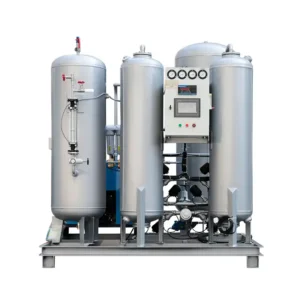
Because of this instability, ozone must be generated on site. The most commonly employed method in aquaculture is called a corona discharge generator, which employs an electric arc to split the diatomic molecule.
Key generation methods:
- Corona discharge — Most common in commercial RAS. Generation from air requires more energy because the corona produces less ozone per second of operation.
- UV-based ozone generators — UV ozone generators are also sold for aquaculture, but they are capable of producing only low levels.
- Oxygen-fed systems — Use oxygen-fed ozone systems to ensure high concentration output and minimal contamination. Since many RAS facilities already use oxygen for aeration, this infrastructure can often be shared for ozone generation.
What Ozone Does Beyond Disinfection
Ozone’s value in aquaculture extends far beyond killing pathogens. Besides disinfection, ozone has other positive effects in a recirculation system and improvement in the system’s water quality may be as important in improving fish health as actually killing pathogens.
Ozone provides:
- Organic load reduction: Ozone is used in RAS as a disinfectant, to remove organic carbon, and also to remove turbidity, algae, color, odor and taste.
- Microflocculation: Ozone can promote the flocculation of microparticles and suspended solids in the water, aiding in their removal through mechanical filtration.
- Nitrite oxidation: Ozone eliminated nitrites but had no impact on ammonical nitrogen.
What Is UV Disinfection and How Does It Work in Aquaculture?
UV disinfection uses ultraviolet light at the germicidal wavelength (primarily 254 nm) to inactivate pathogens by damaging their DNA/RNA, preventing reproduction。
The UV energy permanently alters the DNA structure of the micro-organism in a process called thymine dimerization, which inactivates the micro-organism and renders it unable to reproduce or infect。
Key UV System Components
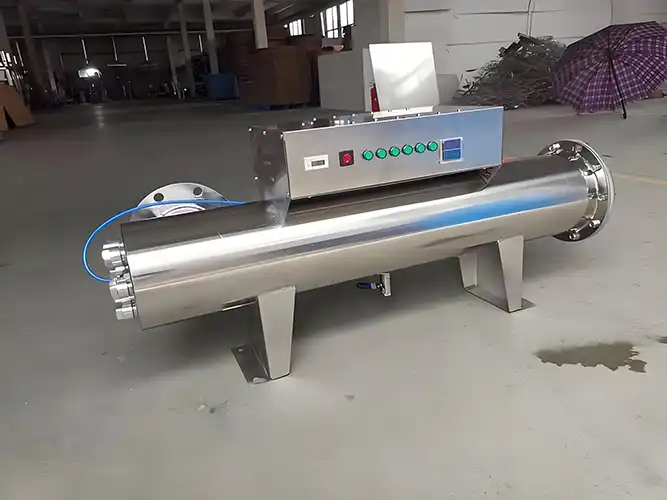
UV sterilization units or UV lamps are installed in the RAS system’s water circulation loop. Water passes through these units, exposing it to UV-C light. UV-C light is germicidal and can effectively inactivate microorganisms by damaging their DNA or RNA, preventing replication。
Two main UV lamp types are used in aquaculture:
| Lamp Type | Wavelength | Best For |
| Low-pressure (LP) | 254 nm (monochromatic) | Cost-efficient continuous disinfection |
| Medium-pressure (MP) | 220–300 nm (polychromatic) | Broader pathogen spectrum; high-flow systems |
Medium pressure UV (polychromatic output) is more effective than low-pressure UV (monochromatic output) on a like-for-like basis. Some organisms absorb at different wavelengths, so medium pressure can be more efficient when dealing with these specific pathogens.
What UV Cannot Do
Unlike ozone, UV is purely a disinfection tool. It does not:
- Remove dissolved organic compounds (DOCs)
- Reduce water color or turbidity
- Oxidize nitrite or ammonia
- Improve microflocculation
As no chemical by-products are added, the crucial water qualities such as pH and temperature remain unaltered. This is both a benefit and a limitation.
Ozone vs UV Aquaculture: Head-to-Head Performance Comparison
The core distinction: ozone is a chemical oxidant that changes water chemistry; UV is a physical process that changes nothing except pathogen viability.
| Feature | Ozone (O₃) | UV Irradiation |
|---|---|---|
| Mechanism | Chemical oxidation | DNA/RNA damage via UV-C |
| Pathogen kill spectrum | Bacteria, viruses, fungi, protozoa | Bacteria, viruses, parasites |
| Water quality improvement | Yes — removes DOC, color, turbidity, nitrite | No — disinfection only |
| Chemical residual | Yes — must be removed before fish contact | None |
| Byproducts (saltwater) | Bromates, hypobromites possible | None |
| Setup complexity | High (generator + contactor + ORP control + de-ozonation) | Low–moderate (lamp + reactor vessel) |
| Ongoing maintenance | ORP probe replacement, generator servicing | Lamp replacement (~annually), quartz sleeve cleaning |
| Energy consumption | Moderate–high | Moderate |
| Safety risk | High (toxic to fish/humans at residual levels) | Low (no chemical risk to fish) |
| Typical RAS application | Side-stream treatment | Full-flow or side-stream |
Disinfection Effectiveness Comparison
Ozone can effectively inactivate a range of bacterial, viral, fungal and protozoan fish pathogens. But the effectiveness of ozone treatment depends on ozone concentration, length of ozone exposure (contact time), pathogen loads and levels of organic matter.
For UV, effectiveness depends heavily on water clarity. The water itself absorbs the radiation and particles and colors in the water absorb even more. UV will kill waterborne microbes, but it must reach them first. Water in recirculation systems is usually stained and carries a large amount of smaller particulates; UV sterilization should be applied at a point in the system where water is the cleanest.
Key research finding: The combination of ozone application followed by UV irradiation was more effective compared to the use of only one method alone in reducing bacteria counts in freshwater aquaculture systems.
Core Advantages and Commercial Value of Ozone vs UV in Aquaculture
Why Choose Ozone for Your Aquaculture Facility
Ozone delivers multi-functional water treatment that goes far beyond disinfection。
1。 Water clarity and quality: Ozone, a powerful oxidizing agent, disinfects and oxidizes organic pollutants while increasing the water’s dissolved oxygen level. The end result is exceptional water quality, which is a fundamental requirement for intensive fish farming。
2。 Growth performance boost: Over 125 days of comparing the feed rate between the ozone basin and the control basin, speckled trout consumed more food in ozonated water. They observed a 90 per cent increase in feed rate resulting in increased growth。
3。 Solids reduction: Turbidity in the ozonated water basin was 0.95 compared to 1.65–3.6 in the non-ozonated water basin. The total suspended solids decreased by around 50 per cent to 4.4 mg/L。
Why Choose UV for Your Aquaculture Facility
UV delivers chemical-free, low-risk disinfection with minimal operational complexity.
1。 No chemical residual: UV light systems economically disinfect make-up water in both fresh and saltwater farms without additional chemicals or bromate formation.
2。 Lower capital cost: UV sterilization can be employed much less expensively than ozonation.
3。 Safe for all species: No chemical by-products are added, the crucial water qualities such as pH and temperature remain unaltered. There is zero risk of chemical toxicity to fish.
4。 Scalability and simplicity: When necessary, UV is preferably used. This is the most common method used in RAS.
Ozone vs UV Aquaculture: Application Scenarios and Sector-Specific Solutions
Scenario 1: Salmon & Trout RAS Hatcheries (Cold Water)
Recommended: Ozone + UV combination。
The Freshwater Institute was a pioneer in the development of ozone use in freshwater RAS. These early studies found that application of low-dose ozone (≈ 25 g O₃/kg feed) reduced the incidence of bacterial gill disease in rainbow trout and improved the fish culture environment by reducing total suspended solids (TSS), total organic carbon, true color, and nitrite-nitrogen levels。
For cold-water salmonid RAS, ozone provides critical water quality benefits. UV is then placed downstream to destroy residual ozone. Ozonation and UV irradiation are often combined in series, as they provide back-up systems and different modes of action. UV irradiation also has the advantage of removing ozone residues from treated water。
Scenario 2: Shrimp RAS (Brackish Water)
Recommended: Ozone with careful OPO monitoring, or UV-only for simpler operations。
This study compared water disinfection by ozonation and UV irradiation in a brackish water RAS for Pacific white shrimp, and results showed that the use of ozone stabilized water microbial composition, controlled nitrite and accelerated nitrate degradation。
However, ozone reacts with bromide in seawater, forming toxic by-products like bromate, complicating its application. Brackish-water shrimp farms must carefully manage ozone-produced oxidants (OPOs)。
Scenario 3: Flow-Through Systems & Intake Water Disinfection
Recommended: UV-only。
Water disinfection using UV is relevant for inlet water in land-based farms. This includes both flow-through systems and RAS。
UV is the most cost-effective choice for single-pass intake water where water quality improvement (DOC removal, color) is not needed。
Scenario 4: Large-Scale Commercial RAS (High Density)
Recommended: Ozone + UV integrated system。
Combining ozone dosages of only 0.1–0.2 min·mg/L with a UV irradiation dosage of approximately 50 mJ/cm² would consistently reduce bacteria counts to near zero. These findings were orders of magnitude lower than the bacteria counts measured in the system when it was operated without disinfection or with UV irradiation alone。
How to Implement Ozone vs UV in Aquaculture: Practical Dosing Guide
Ozone Dosing Parameters for RAS
As a general guideline, ozone dosing typically ranges from 0.1 to 0.3 mg/L based on flow rate. Ozone demand is approximately 12 to 16 grams of ozone per kilogram of feed. However, this is typical for finfish in cold water.
| Parameter | Cold-Water Finfish | Warm-Water Shrimp |
|---|---|---|
| Dose range | 0.1–0.3 mg/L | 0.1–0.5 mg/L |
| Feed-based dosing | 10–25 g O₃/kg feed | Up to 25 g O₃/kg feed |
| Safe residual (return to fish) | <0.05 mg/L | <0.01 mg/L |
| ORP target | 250–350 mV | 250–300 mV |
| Contact time | 1–3 minutes (side-stream) | 1–3 minutes |
Because ozone is highly reactive with a short half-life, contact times are minimal. The recommended contact time is typically from one to three minutes in a side-stream application。
Ozone is reported to be toxic to a wide range of fresh and salt-water organisms at residual concentrations between 0.01 ppm and 0.1 ppm。
UV Dosing Parameters for Aquaculture
The first step towards aquaculture biosecurity is by applying the right UV dose to inactivate the targeted bacteria and viruses. UV disinfection inactivates microorganisms by damaging their DNA and RNA, which prevents them from causing any harm. The inactivation of microorganisms by UV is dependent on the applied UV dose, defined in mJ/cm², consisting of the UV light intensity, residence time, and UV transmittance。
| Target Pathogen | Approximate UV Dose (mJ/cm²) |
|---|---|
| Common bacteria (Aeromonas, Vibrio) | 2–10 mJ/cm² |
| Coliform bacteria | ~77 mJ/cm² (for complete inactivation in RAS) |
| IPN virus | High dose required |
| Sea lice | >100 mJ/cm² |
| General RAS biosecurity | 25–50 mJ/cm² |
According to adopted guidelines from the Norwegian authorities, there is a minimum UV dose to apply: 25 mJ/cm²。
Critical factor — UV transmittance (UVT):
Flow-through fish-culture systems requiring influent disinfection typically test at 90–95% T. In contrast, RAS recirculating aquaculture systems typically test lower at 70–85% T. Low UVT dramatically reduces disinfection effectiveness. Always measure UVT before sizing your UV system。
Ozone vs UV Aquaculture: Industry Compliance and Regulatory Standards
Both technologies must meet biosecurity, worker safety, and environmental discharge standards。
Ozone Safety & Compliance
- OSHA PEL (USA): Ozone is toxic to both fish and humans at relatively low concentrations. The 8-hour human exposure limit for airborne ozone gas established by OSHA is just 0.1 ppm, and the 15-minute exposure limit is only 0.3 ppm。
- Fish toxicity threshold: Residual dissolved ozone must be <0.05 mg/L before water returns to culture tanks。
- Marine/brackish water: Monitor ozone-produced oxidants (OPOs), including bromate and hypobromite. Bromate is regulated in drinking water at 10 µg/L (EPA/WHO)。
- Off-gas management: All off-gas must be vented through ozone destruct units. Loss of the ozone in off gas is a particular concern, because ozone is expensive and because it is dangerous to humans。
UV Compliance
- No chemical residuals — UV systems generally face fewer chemical compliance burdens。
- Norwegian NVI guidelines: Minimum 25 mJ/cm² for intake water disinfection。
- UV water treatment is such a complex technology that the USEPA and other regulatory bodies worldwide have standardized sizing and application regulations for municipal drinking water and waste water. While aquaculture does not abide by regulations per se, capable OEM suppliers use these regulations as guidelines。
Combined System Compliance
When running ozone + UV in series, the UV unit serves dual duty: pathogen inactivation and de-ozonation. UV irradiation doses of 80.4 ± 2.6 mW·s/cm² and 153.3 ± 2.1 mW·s/cm² consistently removed 100% of the dissolved O₃ when the inlet O₃ concentration was 0.30 mg/L. A UV irradiation dose of 49.3 ± 0.6 mW·s/cm² consistently removed 100% of the dissolved O₃ when the inlet O₃ concentration was 0.10 mg/L。
5 Critical Decision Mistakes When Choosing Ozone vs UV for Aquaculture (And How to Avoid Them)
Most buyers treat ozone vs UV aquaculture as a binary choice. That approach leads to under-designed or over-engineered systems. Here are the real-world mistakes we’ve seen across hundreds of aquaculture projects:
Mistake #1: Sizing UV Based on Manufacturer Claims Alone
The UV dose required to inactivate total heterotrophic bacteria — and thus disinfect a recirculating water flow — was nearly 60 times greater than the 30 mW·s/cm² dose typically recommended in aquaculture。
Fix: Always request third-party validated UV dose data. Size based on your facility’s measured UVT under worst-case conditions, not clean-water lab results。
Mistake #2: Ignoring Ozone-Produced Oxidants (OPOs) in Saltwater
In marine recirculating aquaculture systems, ozone is often used in combination with biofiltration for water quality improvement. Especially for disinfection purposes, ozone residuals are required that lead to a fast formation of secondary oxidants in seawater, summed up as ozone-produced oxidants (OPO)。
Fix: In any saltwater or brackish RAS, install OPO monitoring (total residual oxidant sensors) alongside ORP controllers. Budget for activated carbon or UV as a mandatory de-ozonation step。
Mistake #3: Overlooking Biofilter Impact
Chemical disinfection in a recirculating aquaculture system (RAS) may affect biofilm-associated bacteria and the nitrification performance in the biofilter units. The biofilm response to chemical disinfectants in RAS remains unclear。
Fix: Apply ozone via side-stream treatment, not directly to the full recirculation loop. Maintain ORP below 350 mV to protect nitrifying bacteria. UV has no impact on biofilter performance。
Mistake #4: Running UV in Turbid RAS Water Without Pre-filtration
Particles and colors in the water absorb UV radiation. UV will kill waterborne microbes, but it must reach them first. UV sterilization should be applied at a point in the system where water is the cleanest and it works best in systems that have particularly aggressive solids removal coupled with foam fractionation。
Fix: Always position UV after drum filtration and, ideally, after foam fractionation. Monitor UVT continuously and clean quartz sleeves on a fixed schedule。
Mistake #5: Not Calculating Total Cost of Ownership (TCO)
The ozone-based purification system requires a large investment initially. Ozone production consumes energy and the system is quite complex。
However, ozone reduces chemical treatment costs, lowers mortality, and improves feed conversion — factors that many ROI calculations miss entirely。
Fix: Calculate 5-year TCO including: capital cost, energy, lamp/generator replacement, consumables (carbon, probes), labor, mortality reduction, and growth rate improvement。
Frequently Asked Questions: Ozone vs UV Aquaculture
Q1: Is ozone or UV better for RAS aquaculture?
Neither is universally better. Rather than competing, UV and ozone are considered complementary technologies. UV excels at low-cost pathogen inactivation. Ozone excels at water quality improvement plus disinfection. Most advanced RAS facilities use both in series。
Q2: Can ozone replace UV in aquaculture?
Ozone can replace UV for disinfection, but it introduces chemical residuals that require de-ozonation before water reaches fish. UV is simpler and safer for pathogen-only applications. In many systems, ozone cannot fully replace UV’s role as a residual ozone removal step。
Q3: What is the recommended ozone dose for RAS?
As a general guideline, ozone dosing typically ranges from 0.1 to 0.3 mg/L based on flow rate. Ozone demand is approximately 12 to 16 grams of ozone per kilogram of feed. Always calibrate to your specific water chemistry and species。
Q4: What UV dose is needed for aquaculture disinfection?
According to adopted guidelines from the Norwegian authorities, there is a minimum UV dose to apply: 25 mJ/cm². Higher doses (50–80 mJ/cm²) are recommended for full-flow RAS treatment, especially when targeting resistant pathogens。
Q5: Does ozone harm beneficial bacteria in RAS biofilters?
At properly controlled low doses, ozone does not significantly damage biofilter performance. Higher ozone concentrations are a risk to cultured fish stocks causing gross tissue damage and stock mortalities, and also are a risk to bacterial films on the biofilter. Side-stream application and ORP control below 350 mV are essential safeguards。
Q6: Is UV effective in turbid RAS water?
UV effectiveness drops significantly in turbid water. Flow-through fish-culture systems requiring influent disinfection typically test at 90–95% T. In contrast, RAS typically test lower at 70–85% T. Pre-filtration and continuous UVT monitoring are critical for reliable UV performance。
Q7: Does ozone produce harmful byproducts in saltwater aquaculture?
Yes. Ozone reacts with bromide in seawater, forming toxic by-products like bromate, complicating its application. Saltwater and brackish water RAS require OPO monitoring and de-ozonation via activated carbon or UV。
Q8: How long do UV lamps last in aquaculture systems?
UV bulbs lose power rather quickly and must be replaced at least annually. Plan for 8,000–12,000 hour lamp life. Install UV intensity monitors to track real-time output decay and trigger replacement alerts.
Q9: Can I use ozone and UV together in aquaculture?
Yes — this is the industry best practice for high-biosecurity RAS. When ozonation was followed by UV irradiation, total heterotrophic bacteria counts were reduced to 0–4 cfu/mL. Combining ozone dosages of only 0.1–0.2 min·mg/L with a UV irradiation dosage of approximately 50 mJ/cm² would consistently reduce bacteria counts to near zero.
Q10: What is the safest aquaculture disinfection method for shrimp?
In general, the advantages of the use of UV irradiation over ozone application are lower costs and an easier maintenance of the reactors. UV is the safer choice for smaller shrimp operations. However, research showed that ozone stabilized the microbial community more effectively in shrimp RAS, making ozone + UV the optimal combination for large commercial shrimp farms willing to invest in monitoring.
Choosing Between Ozone vs UV for Aquaculture: Your Next Steps
The ozone vs UV aquaculture debate comes down to this: UV delivers affordable, safe, chemical-free disinfection. Ozone delivers multi-functional water quality improvement plus disinfection — at higher cost and complexity. The most successful RAS operations worldwide combine both technologies in series, leveraging ozone’s oxidation power and UV’s residual-free safety to achieve near-zero pathogen levels and exceptional water quality.
Your ideal configuration depends on your species, water source, stocking density, salinity, budget, and regulatory environment. There is no one-size-fits-all answer.
📞 Ready to specify? 【Contact our aquaculture water treatment engineers】 for a free system design consultation tailored to your facility’s exact requirements — including flow rate analysis, species-specific dosing recommendations, and full cost-of-ownership projections.