You size an ozone generator for aquaculture primarily by calculating your daily feed input and applying the industry-standard feed-to-ozone ratio — approximately 10–16 grams of ozone per kilogram of feed for cold-water finfish, and up to 25 g O₃/kg feed for crustacean species. This guide breaks down every variable you need — water volume, flow rate, species type, system design (RAS vs. flow-through), ORP target levels, and mass transfer losses — so you can select the right ozone generator capacity with confidence.
Why Ozone Generator Sizing Matters in Aquaculture
An undersized unit fails to control pathogens and organics. An oversized unit wastes energy and risks fish toxicity.
In a poorly designed system, residual ozone (an overdose) can reach culture tanks and potentially affect farmed species, while electricity is wasted — creating a significant monetary impact.
Correct sizing ensures:
• Pathogen reduction without lethal residual ozone reaching fish tanks
• Organic load control (dissolved organics, fine solids, water color)
• Cost efficiency — no overspending on excess ozone output capacity
• Regulatory compliance with OSHA and EPA exposure limits
How Do I Calculate Ozone Demand for Aquaculture?
Start with your daily feed rate — it drives ozone demand in every RAS facility.
The required amount of ozone for treatment in an RAS typically follows the daily feed rate.Use this core formula:
Ozone Generator Output (g/h) = (Daily Feed in kg × Ozone Dose in g O₃/kg feed) ÷ Operating Hours per Day
What Ozone-to-Feed Ratio Should I Use?
Rates of 10–15g of ozone per kilogram of feed generally reduce accumulated organics.Here are benchmarks by application:
| Application | Ozone Dose (g O₃/kg feed) |
|---|---|
| Freshwater finfish (water quality) | 10–15 |
| Cold-water salmonids (enhanced quality) | 15–25 |
| Crustaceans (shrimp, lobster) | 20–25 |
| High-dose disinfection (with UV follow-up) | 25+ |
Previous research indicates that achieving water quality control benefits required the addition of 15–25 g of ozone (O₃) for every kilogram of feed fed to the recirculating system.
Example: A RAS facility feeding 50 kg/day of salmon feed at 15 g O₃/kg, running ozone 24 hours:
• 50 kg × 15 g/kg = 750 g/day ÷ 24 h = 31.25 g/h minimum ozone output
How Does Water Volume Affect Ozone Generator Sizing?
When sizing an ozone generator, ozone demand — how much ozone per volume of water you need — is the most important factor.
For inlet water disinfection (not RAS recirculation), use this formula:
Required Ozone Production (mg/hr) = Water Flow Rate (GPM) × 3.78 × 60 × Target Ozone Dose (mg/L).
General reference points: freshwater aquaculture uses approximately 1 gram of ozone per cubic meter of water, while mariculture disinfection uses approximately 2 grams per cubic meter.
What ORP Level Should I Target When Sizing?
For freshwater aquaculture, maintain ORP at or below 300–320 mV at the culture tank inlet.
A safe ORP level for freshwater fish culture is generally considered to be 300 mV. When an upper ORP setpoint is reached (typically 300–320 mV), automated systems either close a solenoid valve to suspend ozone addition or discontinue O₃ output until a lower ORP setpoint is reached.
ORP Safety Thresholds by Water Type
| Water Type | Safe ORP Range | Critical Warning |
|---|---|---|
| Freshwater RAS | 250–320 mV | Do not exceed 350 mV |
| Brackish water | 250–300 mV | Toxic byproducts above 350 mV |
| Seawater | 200–300 mV | Bromate formation above 350 mV |
When treating seawater, ORP should receive careful monitoring. Exceeding 800 mV of ORP can oxidize bromide ions into bromine, which is toxic to aquatic species.
Research corroborates that ≤350 mV is likely the safe ORP threshold value for many farmed fish.
Pro tip: ORP measurements require accuracy and reliability — use the average reading from two probes rather than relying on a single sensor.
What Compensation Factors Should I Include in Sizing?
Never use the theoretical ozone production number as your final generator size. Real-world losses demand significant compensation.
In real-world applications, the ozone generator must be sized above the theoretical requirement to compensate for mass transfer losses and ozone demand within the water matrix.
Key compensation factors:
• Mass transfer efficiency: Venturi injectors achieve 80–95% transfer. Diffusers typically deliver 60–80%. Size up accordingly.
• Ozone half-life: Ozone has a short half-life, typically ranging from 6 to 20 minutes, depending on water temperature and organic load.
• Water temperature: Warmer water accelerates ozone decay. Tropical shrimp systems need 20–40% more capacity than cold-water salmonid farms.
• Organic load variability: Any background organic loadings of the source water used for the RAS should also be taken into account.
Apply a safety multiplier of 1.5–2× on your theoretical calculation to account for these losses.
How Do I Choose Between Air-Fed and Oxygen-Fed Ozone Generators?
Oxygen-fed generators produce 2–3× more ozone per unit of energy and dominate commercial aquaculture.
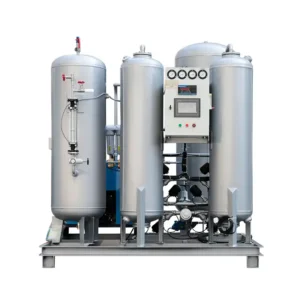
In aquaculture, ozone is typically produced on-site using an ozone generator supplied with pure oxygen. The process involves passing the oxygen through a corona discharge, splitting O₂ molecules into individual oxygen atoms that recombine to form O₃. Most commercial generators produce ozone at concentrations of around 10% by weight.
| Feature | Air-Fed | Oxygen-Fed |
|---|---|---|
| Ozone concentration | 1–3% by weight | 6–12% by weight |
| Output efficiency | Lower | 2–3× higher |
| Maintenance | Higher (moisture issues) | Lower |
| Best for | Small-scale, budget setups | Commercial RAS, hatcheries |
For any system requiring more than 10 g/h output, oxygen-fed corona discharge generators deliver better ROI.
How Do I Size an Ozone Generator for a RAS System?
Follow this 5-step sizing protocol used by commercial aquaculture engineers:
• Calculate daily feed input (kg/day)
• Select ozone dose (10–25 g O₃/kg feed based on species and goal)
• Determine operating hours (continuous 24h recommended for RAS)
• Calculate base output = (feed × dose) ÷ hours
• Apply 1.5–2× compensation multiplier for transfer losses, temperature, and organic demand
These are approximate values; actual dosing depends on factors such as system design (raceway, RAS, or hybrid), water temperature, and species-specific requirements.
Real-World Sizing Example
| Parameter | Value |
|---|---|
| Species | Atlantic salmon (post-smolt) |
| Daily feed | 100 kg/day |
| Ozone dose | 15 g O₃/kg feed |
| Operating hours | 24 h |
| Base output | 62.5 g/h |
| Compensation (1.5×) | 93.75 g/h |
| Recommended generator | 100 g/h rated output |
Commercial ozone generators for aquaculture range from 1 g/h up to 15,000 g/h, with multiple units available for larger applications.
What Contact Time Does Ozone Need in Aquaculture?
Because ozone is highly reactive with a short half-life, contact times are minimal. The recommended contact time is typically 1 to 3 minutes in a side-stream application. Higher ozone concentration results in lower contact times and vice-versa.
For inlet water disinfection, natural waters generally require residual concentrations of 0.1–0.2 ppm ozone and contact times of 1–5 minutes.
Size your contact chamber volume accordingly:
Contact Chamber Volume (L) = Flow Rate (L/min) × Required Contact Time (min)
Difference: Sizing for Freshwater vs. Saltwater Aquaculture
Saltwater ozone systems require more conservative sizing and stricter ORP monitoring.
Ozone can be used in seawater and brackish water systems. However, its application is safer in freshwater where the primary reaction byproduct is oxygen.
Ozone reacts with bromide in seawater, forming toxic byproducts like bromate, complicating its application.
Key saltwater sizing adjustments:
• Keep ORP below 300 mV (vs. 320 mV for freshwater)
• Install activated carbon filtration downstream
• Add TRO (Total Residual Oxidant) monitoring
• Use UV irradiation post-ozonation as a failsafe
Common Ozone Generator Sizing Mistakes to Avoid
Most aquaculture operators make these costly errors:
• Using theoretical output as final size — Always apply the 1.5–2× compensation multiplier
• Ignoring feed rate fluctuations — Size for peak feeding, not average
• Skipping ORP automation — Manual dosing creates inconsistent results and fish safety risks
• Choosing air-fed generators for commercial RAS — Oxygen-fed systems outperform in efficiency and reliability
• Neglecting ambient ozone gas monitoring — The 8-h human exposure limit for airborne ozone gas established by OSHA is just 0.1 ppm, and the 15-minute exposure limit is only 0.3 ppm. RAS facilities utilizing ozone should install and maintain ambient ozone sensors, alarms, and remote generator shut-off systems.
• Oversizing without UV backup — A relatively strong ozone dose to achieve >375 mV ORP can be applied to RAS water only when followed by UV irradiation sufficient to destroy residual ozone before water returns to the fish tank.
Cost Optimization: Right-Sizing Saves Money
Oversizing wastes electricity. Undersizing causes fish mortality. Precision sizing protects both.
Unlike potable water applications, RAS does not require ozone at disinfection or sanitation levels. The goal is to reduce pathogens and organic load, not eliminate them entirely. This allows for smaller, scalable ozone units tailored to water recirculation rates and feed input.
Consider these cost-saving strategies:
• Modular generators — Scale capacity with production growth
• Shared oxygen infrastructure — Since many RAS facilities already use oxygen for aeration, this infrastructure can often be shared for ozone generation.
• Serial/batch ozonation — Concentrations of ammonia and dissolved organics peak 3–4 hours after feeding. A series of ozone treatments introduced after each feed can target associated rises in waste levels.
FAQ: Ozone Generator Sizing for Aquaculture
Q: How many grams of ozone per hour do I need for a small fish farm?
A: Calculate daily feed × 10–15 g O₃/kg feed, then divide by operating hours. A farm feeding 20 kg/day needs approximately 12.5–25 g/h before compensation. Always apply a 1.5× multiplier for real-world conditions.
Q: What size ozone generator do I need for a 50,000-liter RAS tank?
A: Tank volume alone does not determine sizing. Base your calculation on daily feed input and the feed-to-ozone ratio. A 50,000-liter system feeding 30 kg/day at 15 g O₃/kg needs approximately 28 g/h (with compensation: ~42 g/h).
Q: Does water temperature affect ozone generator sizing?
A: Yes. Warmer water accelerates ozone decay. The half-life of ozone refers to the time required for half of a given quantity of ozone to decay into oxygen. Ozone is unstable and readily decomposes, making half-life an essential sizing factor. Tropical systems (28–32°C) may require 30–50% more capacity than cold-water systems (10–15°C).
Q: Is ORP the best way to control ozone dosing in aquaculture?
A: The feed-to-ozone ratio is commonly used for sizing. However, the most efficient way to control ozone dosing in operation is by monitoring the ORP (Oxidation-Reduction Potential). Use feed ratios for initial sizing and ORP for real-time operational control.
Q: What happens if I oversize my ozone generator?
A: Higher ozone concentrations risk gross tissue damage and stock mortalities in cultured fish, and also threaten bacterial films on the biofilter. Oversizing without proper automated ORP control creates both fish welfare and economic losses.
Final Takeaway
Sizing an ozone generator for aquaculture comes down to three pillars: daily feed rate, species-specific dosing ratios, and real-world compensation factors. Use the 10–25 g O₃/kg feed benchmark, apply a 1.5–2× safety multiplier for transfer efficiency and decay losses, and always automate dosing with ORP control. Whether you operate a freshwater salmon RAS or a tropical shrimp hatchery, precision sizing protects fish health, optimizes operating costs, and keeps your facility compliant with OSHA and industry safety standards.
Need help selecting the right ozone generator capacity for your aquaculture facility? Explore our [ozone generator product range] or [contact our technical team] for a free, customized sizing consultation based on your exact system parameters.