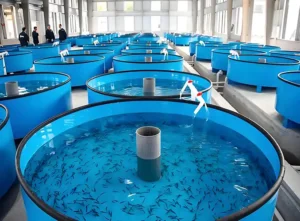
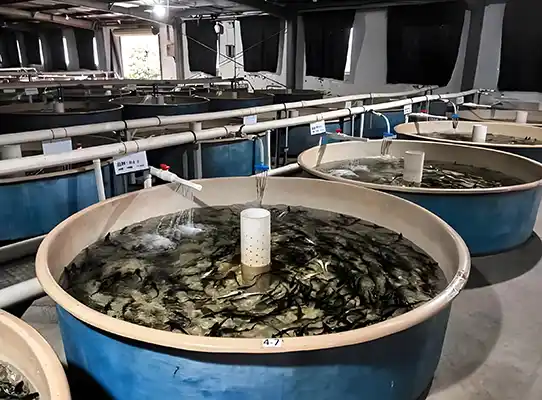
Ozone (O₃) is a powerful oxidant used in both the aquaculture and water treatment industries to improve water quality and reduce pathogens during pretreatment, treatment of effluent, as a continual treatment during RAS operations, and for bivalve depuration. If you manage a fish farm, shrimp hatchery, or any recirculating aquaculture system (RAS), understanding the purpose of ozone in water is essential to profitable, disease-free production.
How Does Ozone Work in Aquaculture Water Treatment?
Ozone oxidizes contaminants on contact and then reverts to pure oxygen, leaving zero toxic residue.
Ozone (O₃) is a highly effective oxidizing agent that improves water quality by disinfecting, removing algae, breaking down organic waste, and controlling pathogens without the need for harmful chemicals.
Here is a step-by-step breakdown:
• Generation — Oxygen is converted to ozone within the ozone generator via corona discharge.
• Injection — Ozone is injected via venturi, where it oxidizes organic waste, nitrite, and pathogens in a contact tank.
• Reaction — Ozone breaks apart dissolved organics, bacteria, and viruses within minutes.
• Decomposition — Ozone decomposes into pure oxygen, leaving no toxic residue, making it the most sustainable solution for aquaculture disinfection and water quality control.
What Does Ozone Remove From Aquaculture Water?
Ozone targets organics, pathogens, nitrite, color, and suspended solids simultaneously.
The various uses of ozone in aquaculture range from removal of colloidal solids, dissolved organic compounds, nitrite, as well as disinfection of bacterial, viral, fungal, and protozoan fish pathogens.
| Contaminant | Ozone Action |
|---|---|
| Bacteria & viruses | Destroys cell walls via protoplasmic oxidation |
| Dissolved organic matter | Oxidizes DOC, reduces color and COD |
| Nitrite (NO₂⁻) | Oxidizes to less-toxic nitrate (NO₃⁻) |
| Suspended solids | Promotes micro-flocculation for easier filtration |
| Off-flavor compounds | Reduces precursors of geosmin and MIB |
Why Is Ozone Important for Recirculating Aquaculture Systems (RAS)?
RAS facilities reuse 90–99% of their water, so contaminants accumulate fast without advanced oxidation.
Modern aquaculture relies on intensive recirculating systems to maximize production within limited water resources. Maintaining optimal water quality in these systems is critical to fish health and operational success.
Key RAS benefits of ozone:
• It oxidizes various deteriorating agents such as carbon-based compounds and nitrite, natural organic matter (NOM), chemical oxygen demand (COD), colour and suspended solids.
• It has been also reported to reduce geosmin, bacteria, and miscellaneous fish pathogens, resulting in improved growth while enriching the water with oxygen, which is formed during ozone degradation.
• It reduces water exchange needs, improving water recirculation efficiency and leading to more sustainable operations.
What Is the Safe Ozone Dosage for Aquaculture?
Target 0.1–0.3 mg/L dissolved ozone in RAS water and keep ORP below 300–350 mV for freshwater species.
Target dissolved ozone concentrations range from 0.1–0.3 mg/L, enough for oxidation but safe for aquatic species. Automation through ORP sensors maintains stable control, typically between 300–350 mV in RAS systems.
How to Monitor and Control Ozone in Fish Tanks
A widely used method to control the delivery of ozone into water is the oxidation reduction potential (ORP), which measures a balance between the concentrations and willingness of substances in solution to give up or receive electrons.
Practical setup:
• When an upper ORP setpoint is reached (typically 300–320 mV), a solenoid valve closes to temporarily suspend ozone addition, or O₃ output is automatically discontinued by the ozone generator until a lower ORP setpoint is reached.
• A safe ORP level for freshwater fish culture is generally considered to be 300 mV.
• For marine/brackish water, ozone is predominantly used in freshwater systems due to the high risk of toxic residual oxidant exposure in brackish water and seawater. Extra caution is required.
⚠️ Compliance Note: OSHA sets workplace exposure limits for ozone at 0.1 ppm (8-hour TWA) and 0.3 ppm (15-minute STEL). Always install ambient ozone monitors and destruct systems.
Ozone vs. Chlorine vs. UV: Which Is Best for Aquaculture?
Ozone delivers disinfection plus oxidation in one step. Chlorine leaves harmful residues. UV only disinfects at point of contact.
| Feature | Ozone | Chlorine | UV |
|---|---|---|---|
| Disinfection speed | Up to 3,000× faster than Cl₂ | Baseline | Fast at point of contact |
| Residual byproducts | Reverts to O₂ | Chloroforms, THMs | None |
| Oxidation of organics | ✅ Yes | Limited | ❌ No |
| Algae control | ✅ Yes | Partial | ❌ No |
| DO₂ boost | ✅ Yes | ❌ No | ❌ No |
| Chemical storage needed | ❌ Generated on-site | ✅ Yes | ❌ No |
While UV is limited to disinfection, ozone is also an effective treatment for taste, odor and color removal, iron and manganese reduction, as well as being a flocculating agent.
Pro tip: Combining ozone dosages of only 0.1–0.2 mg/L with a UV irradiation dosage of approximately 50 mJ/cm² consistently reduces bacteria counts to near zero. Many top-tier RAS facilities use ozone + UV together for maximum biosecurity.
Does Ozone Improve Fish Growth and Survival Rates?
Yes. Research confirms ozone-treated RAS water accelerates fish growth and cuts mortality.
By effectively removing pathogens and organic matter, ozone enhances water quality and reduces the risk of disease outbreaks. Healthier fish exhibit increased feed intake and faster growth rates, leading to improved productivity and profitability for aquaculture operations.
Rainbow trout grew significantly faster in low-exchange RAS operated with ozone compared to trout raised in similarly operated RAS without ozone, and without negative effects to key fish health and welfare indicators.
One client experience showed ozone virtually eliminated fish mortality and disease, and increased fish weight gain by about 40%.
What Are the Risks of Using Ozone in Aquaculture?
Overdosing is the primary risk. Excessive ozone damages fish gills and can crash your biofilter.
• Excessive ozone levels can damage fish gills, while inadequate ozone levels may lead to water quality issues.
• The reduction of nitrite levels by ozone carries a risk. The biofilter receives less nitrite and the population of bacteria responsible for processing nitrite to nitrate diminishes. If any disruption to ozonation occurs, dangerous spikes in nitrite concentration can subsequently develop.
• Exceeding 800 mV of ORP in seawater can oxidize bromide ions into bromine, which is toxic to aquatic species.
Mitigation strategies:
• Use automated ORP-controlled dosing with fail-safe shutoffs.
• Treat water through a degassing column to prevent ozone carryover before returning to fish tanks.
• Materials used in an ozone treatment system must be highly resistant or inert to ozone. Use of improper materials can lead to erosion of the unit and cause dangerous and costly leakages.
• Use ozone-resistant materials: 316 stainless steel, PTFE (Teflon), Kynar (PVDF), silicone. Avoid natural rubber, copper, brass, and standard PVC fittings.
FAQ: Ozone in Aquaculture Water Treatment
Q1: Is ozone safe for shrimp farming?
Yes. In shrimp farming, ozone is increasingly used as a replacement for chlorine, particularly in areas where electricity is cheaper than chemical supply chains. Keep ORP below 350 mV and use degassing before culture tanks.
Q4: Does ozone kill beneficial biofilter bacteria?
It can. The biofilter receives less nitrite and the population of nitrifying bacteria diminishes when ozone reduces nitrite levels. Inject ozone downstream of the biofilter and use degassing to protect biological filtration.
Q6: Is ozone FDA-approved for aquaculture use?
FDA regulates ozone use in food processing (21 CFR 173.368, GRAS status since 2001). For shellfish processing, ozone may be used in a shellfish processing facility for water treatment, equipment sanitizing, and as an antimicrobial on shucked meats, but it must be used in accordance with GMPs and meeting FDA’s or EPA’s requirements.
The purpose of ozone in water for aquaculture is clear: it disinfects, oxidizes organic waste, reduces nitrite, boosts dissolved oxygen, and accelerates fish growth — all without leaving chemical residues. Whether you operate a freshwater RAS, a marine hatchery, or a shrimp grow-out facility, properly dosed ozone is one of the highest-ROI investments you can make.
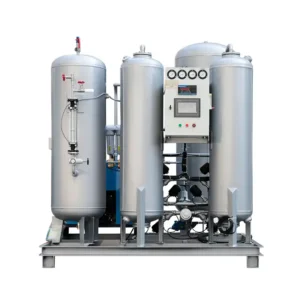
Ready to source the right ozone system for your aquaculture operation? Explore our ozone generator for RAS and hatchery applications, or contact our technical team for a free system sizing consultation tailored to your water volume and species requirements.