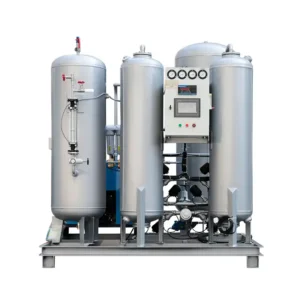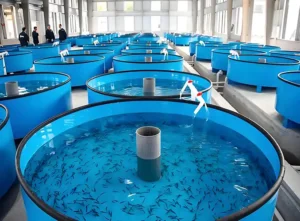
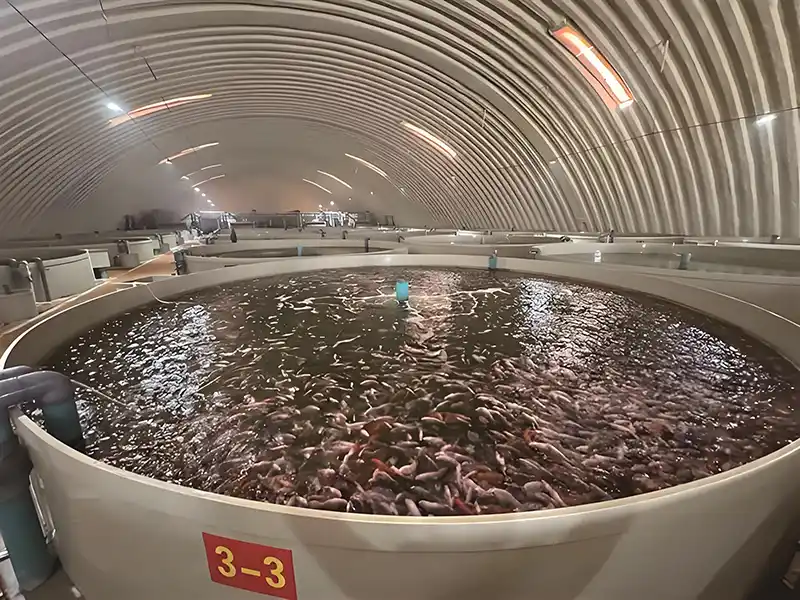
Fish farms use ozone because it is the most effective chemical-free method to disinfect water, eliminate pathogens, remove organic waste, and boost dissolved oxygen levels — all in a single treatment step. Ozone generators are used in aquaculture and aquafarming to improve water quality, enhance water treatment system efficiency, and reduce pathogens. Ozone has virtually eliminated fish mortality and disease, saving thousands of dollars for fish farms, and increased fish weight gain by about 40% in documented client experiences.
In this comprehensive guide, you will learn exactly how ozone works in fish farming systems, why RAS facilities depend on it, what dosing levels are safe, and how to avoid costly mistakes.
How Does Ozone Work in Fish Farming?
Ozone (O₃) is a powerful oxidant made of three oxygen atoms. It reacts instantly with contaminants in water, then breaks down into pure oxygen.
Ozone is produced by passing oxygen (O₂) through a high-energy electrical discharge (corona discharge) inside an ozone generator. This process forms ozone (O₃), a potent oxidizing agent.
Here is the step-by-step process in a typical aquaculture system:
• Ozone generation — Ozone is produced on-site using ozone generators, which convert oxygen from air or concentrated oxygen sources into ozone.
• Ozone injection — The ozone gas is injected into aquaculture water through diffusers or contact systems, where it dissolves and reacts with contaminants.
• Oxidation & disinfection — These reactions break down undesirable substances into simpler, harmless compounds.
• Decomposition to oxygen — After reaction, ozone decomposes back into oxygen, increasing dissolved oxygen (DO) levels — essential for healthy fish respiration and metabolism.
Where Is Ozone Installed in a RAS System?
In recirculating aquaculture systems, ozone treatment is typically installed after mechanical filtration and before biofilters. This reduces organic load, supports biofilter performance, and stabilizes water quality.
A complete ozone-integrated RAS loop includes:
| Component | Function |
|---|---|
| Fish tanks | Grow-out environment |
| Mechanical filtration | Removes solid waste |
| Ozone contact tank | Oxidizes organics, nitrite, and pathogens |
| Biofiltration | Converts ammonia to nitrate |
| Degassing column | Strips residual ozone before return |
| Return to tanks | Clean, ozone-free, oxygen-rich water |
What Are the Key Benefits of Ozone in Aquaculture?
Ozone delivers five critical advantages that no single chemical disinfectant can match.
1. Superior Water Quality Improvement
Ozone serves as a powerful cleaning agent in fish farms, breaking down both organic and inorganic substances, and effectively lowering levels of COD, BOD, suspended solids, turbidity, colour, odour, and taste.
• Ozone removes fine and colloidal solids by causing clumping of the solids (microflocculation), which facilitates removal by foam-fractionation, filtration, and sedimentation.
• Ozone oxidizes dissolved organic compounds (DOCs) into simpler, more bioavailable compounds, enhancing nitrification and reducing waste buildup.
2. Broad-Spectrum Pathogen Control
Ozone effectively inactivates bacteria, viruses, fungi, and protozoa, reducing pathogen loads from source and effluent waters.
This matters because bacterial and viral diseases create serious problems in semi-intensive and intensive aquaculture. Use of surface water in flow-through systems represents a risk of contamination by introducing waterborne fish pathogenic microorganisms. Such contamination results in heavy losses in aquaculture worldwide.
3. Enhanced Fish Growth and Survival
Cleaner, oxygen-rich water supports faster growth rates and higher survival percentages.
Research backs this up. Rainbow trout grew significantly faster in low exchange RAS operated with ozone compared to trout raised in similarly operated RAS without ozone, and without negative effects to key fish health and welfare indicators.
4. Reduced Chemical and Antibiotic Use
By minimizing the need for chemical disinfectants and antibiotics, ozone promotes a more natural and eco-friendly aquaculture system.
With fewer disease outbreaks, fish farms using ozone technology require fewer antibiotics. This aligns with global regulatory pressure to reduce antimicrobial use in food production.
5. Water Conservation and Lower Operating Costs
RAS benefit significantly from ozone treatment as it helps in managing water quality by reducing organic load, controlling pathogens, and maintaining optimal oxygen levels. Ozone helps in reducing the frequency of water exchanges, making RAS more efficient and cost-effective.
How Does Ozone Remove Nitrite in Fish Farms?
Ozone directly oxidizes toxic nitrite (NO₂⁻) into safer nitrate (NO₃⁻). This is critical for intensive production systems.
Nitrite can accumulate as production intensifies and organic loadings increase. Bacteria that process ammonia into nitrite (Nitrosomonas spp) operate more efficiently under high organic loadings than bacteria that process nitrite to nitrate (Nitrobacter), and levels of nitrite rise accordingly. High levels of nitrite can be toxic to fish. Data available for silver perch indicates levels of nitrite as low as 2.8 ppm can reduce growth of fingerlings by 5%.
Ozone helps by oxidizing nitrite to nitrate and reducing organic load, supporting more efficient and balanced biofiltration.
What Is the Correct Ozone Dosage for Fish Farms?
Dosing depends on two primary variables: daily feed rate and water recirculation rate.
The required amount of ozone for treatment in an RAS is usually calculated according to the daily feed rate. Rates of 10–15 g of ozone per kilogram of feed are generally recommended to reduce accumulated organics.
Key dosing benchmarks:
| Goal | Residual Ozone | Contact Time |
|---|---|---|
| Organic oxidation | No residual needed | 1–3 min |
| Pathogen reduction | 0.1–0.2 mg/L | 1–5 min |
| Full disinfection | 0.1–2.0 mg/L | 1–30 min |
Target dissolved ozone concentrations range from 0.1–0.3 mg/L, enough for oxidation but safe for aquatic species. Automation through ORP sensors maintains stable control, typically between 300–350 mV in RAS systems.
⚠️ Safety note: To ensure safe and robust treatment, it is vital to define the ozone demand and ozone kinetics of the specific water matrix to avoid ozone overdose. Always conduct pilot testing before full-scale deployment.
Is Ozone Safe for Fish and Workers?
Fish Safety
Yes — when properly controlled. Ozone dosing is carefully controlled to ensure safety for aquatic organisms.
Ozone has a short half-life, typically ranging from six to 20 minutes, depending on water temperature and organic load. This offers immediate reactivity — ozone reacts instantly with pathogens, requiring minimal contact time. By the time treated water re-enters the growth basin, ozone concentrations are significantly reduced, minimizing any impact on aquatic species.
Most modern systems use a degassing column or UV destruction unit before water returns to the fish tanks.
Worker Safety
Exposure standards for residual ozone of various international occupational health and safety administrations range between 0.05 and 0.1 ppm for an 8-hour work period and a maximum single dosage of 0.3 ppm for less than 10 minutes.
Best practices:
• Install ambient ozone monitors in the facility
• Ensure adequate ventilation near ozone injection points
• Venting of sheds or areas of a RAS where ozone is used is highly recommended.
Is Ozone FDA and USDA Approved for Aquaculture?
Yes. Ozone has been given GRAS (Generally Recognized as Safe) approval by the USDA and the FDA for direct contact with food products, including all meat and poultry products.
The final rule from the FDA providing GRAS approval was given in 2001; the USDA followed with the final rule granting GRAS approval for ozone in 2002.
Ozone was also approved under the USDA Organic Rule in 2000. This makes ozone one of the few treatment technologies compliant with both conventional and organic aquaculture operations.
Ozone vs. UV vs. Chlorine: Which Is Best for Fish Farms?
| Factor | Ozone (O₃) | UV Irradiation | Chlorine |
|---|---|---|---|
| Pathogen kill rate | Very high | High | Moderate |
| Chemical residue | None — decomposes to O₂ | None | Yes — harmful byproducts |
| Water quality improvement | Yes — oxidizes organics, nitrite, color | No | Minimal |
| Dissolved oxygen boost | Yes | No | No |
| Organic certification eligible | Yes | Yes | No |
| Ongoing chemical cost | None | None | Continuous |
| Best for | RAS, hatcheries, intensive farms | Supplementary to ozone | Flow-through only (limited) |
Ozone has seen wide use in aquaculture because it has a rapid reaction rate, produces few harmful reaction byproducts in freshwater, and oxygen is produced as a reaction end-product. It is an extremely reactive oxidant and a very effective bactericide and viricide.
Pro tip: Many leading RAS facilities combine ozone + UV for maximum biosecurity. The combined use of ozone (O₃) and ultraviolet (UV) radiation in fisheries disinfection, particularly in Recirculating Aquaculture Systems (RAS), can be an effective method for maintaining water quality and preventing disease outbreaks.
Frequently Asked Questions
Q1: Can ozone kill parasites in fish farms?
Yes. Ozone neutralizes a wide range of pathogens, including bacteria, viruses, and parasites, without leaving harmful residues. Protozoan parasites like Ichthyophthirius and Trichodina are effectively controlled at standard dosing levels.
Q2: How much does an ozone system cost for aquaculture?
Initial investment ranges from $5,000 for small hatcheries to $50,000+ for large commercial RAS. While there is an initial investment in ozone equipment, these systems can provide long-term cost savings by reducing the need for chemical treatments and minimizing disease-related losses.
Q3: Does ozone affect the taste of farmed fish?
Yes — positively. Ozone can help eliminate unpleasant odors and off-flavors in the water, which can affect the taste and quality of the fish. One farm successfully rebranded Tilapia as “Northern Perch” after improving quality with ozone.
Q4: Can ozone be used in saltwater aquaculture?
Yes, but with caution. In seawater, ozone can produce bromate and other oxidants. Ozone at a concentration not exceeding 0.5 mg/L (to minimize bromate production) can be used to treat seawater in batches. Always monitor total residual oxidants (TRO) in marine systems.
Conclusion & Next Steps
Fish farms use ozone because it solves the biggest operational challenges in modern aquaculture — water quality, disease control, fish growth, and regulatory compliance — all with a single, chemical-free technology. Whether you operate a tilapia pond or a commercial salmon RAS, understanding why fish farms use ozone is the first step toward higher yields and lower costs.
Ready to specify the right ozone system for your facility? Explore our [industrial ozone generators for aquaculture] to compare models, or [contact our engineering team] for a free system sizing consultation tailored to your species, water volume, and production goals.